
"Kajillionaire": A Strange, Beautiful, and Gentle Story of Lost and Found Home
'Kajillionaire' is a touching and eccentric story about family, crime, and the search for belonging.
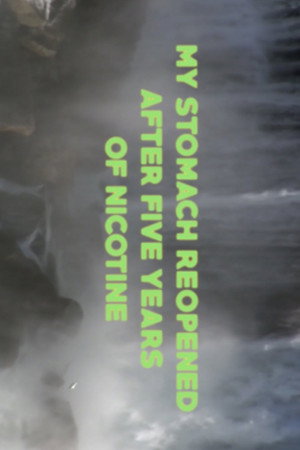


"Waterfall Confessional begins as a montage of hazy waterfalls captioned with simple statements. The waterfalls are kitsch, in that they have a 'designed for television' profundity. Situated in a public space, like Masons Screen, I imagine the video as a storefront television from a Superman cartoon, the ones Jimmy Olsen and Lois Lane, and a crowd of onlookers, gather in front of to see what Superman is doing. In this case, Superman isn’t quite sure what he is doing. Like television news, it is sort of hollow.The text describes a moment of crisis, without providing much detail. These waterfalls transition into a series of spinning objects, of various scales, collected with a rapid, sincere dance beat. Muffled dialogue sporadically intrudes under the footage." - Artist Statement
'Kajillionaire' is a touching and eccentric story about family, crime, and the search for belonging.
When you first hear that there is a series on Netflix where the lead character’s wife dies from cancer and he becomes dangerously suicidal, you wouldn’t immediately assume that it’s a comedy.
From its visually stunning opening credits, which show women dancing through a forest to musical rhythms that sound almost primal, to its quiet, heartbreaking final frame, Mona Fastvold’s historical rendering of the Shaker religious movement is an experience that will stay with me for a long time.
Stylish, slow, and somewhat standoffish, Human Resource examines corporate life from the perspective of a female HR employee as she interviews job candidates while also deciding whether to keep her newly discovered pregnancy.
The venn diagram of pop feminism and white-centered feminism is a circle. Acknowledging that is not a crime nor a diminishing of 'Barbie', Director Gerwig, or feminism in general.
Netflix’s Shadow and Bone has a complicated relationship with race. It has a diverse cast, but not without its problems. Based on Leigh Bardugo’s two book series, the show features characters from the Shadow and Bone trilogy, which is very straight and white, and the Six of Crows duology, which is much more diverse. When bringing together a cast and writing about these characters, the team behind the show expanded upon some of the representation missing from the first trilogy, then seemed to take away representation from the duology. Shadow and Bone seems to play a bit of a push and pull game when it comes to portraying diversity onscreen.