


"Waves" Goes the Wrong Direction in Racial Depiction, Despite Its Intent and Beauty
Spoiler Warning

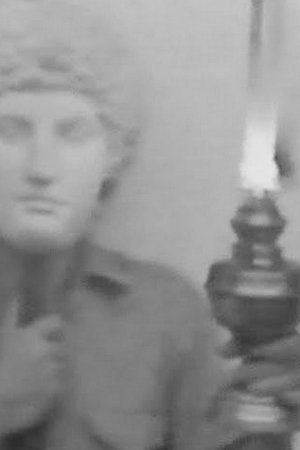
The only video work Kounellis has ever made: His vision, in the small exhibition itinerary, takes place beyond a black curtain, in a small room created inside the exhibition space for visitors to enter one at a time. It is alone that one goes to interrogate the oracle. From a monitor, placed higher than usual, the mask of Apollo appears in its unshakeable immobility. Kounellis holds it in his right hand, while in his left he holds a lit oil lamp. There is the measurable time of the video, the 25 minutes of its physical duration: The historical time exists in which the artist offered himself to the fixed shot of the camera. Lastly, there is perennial time, the incorrupt cycle of the ancient Divinity who has always presided over the manifestation of light and art and of which Kounellis is but one of the infinite epiphanies.
Spoiler Warning
The iconic title character stars in her own horror and gothic TV series.
Cord Jefferson's hilarious and thought-provoking film continues a long-standing cinematic tradition, expanding the conversation around the impact of systemic racism in today's media.
In Saudi Arabia, a little girl (Wadjda) is told she can't have a bike because she's a girl. Wadjda struggles to obtain a bicycle to race her friend, Abdullah, due to the gender inequality and cultural norms of Saudi Arabia.
In The Women and the Murderer, directors Mona Achache and Patricia Tourancheau center women—the very demographic true crime is designed to appeal to.
If a movie about a strange and crazy day is commercially successful, why not recycle it and double the kookiness quotient? That seems to be the logic behind this followup to Freaky Friday.