
Hamnet: A Passage through Time to the Magnificent Forest
A family drama is woven with quiet yet powerful forces of words and nature.
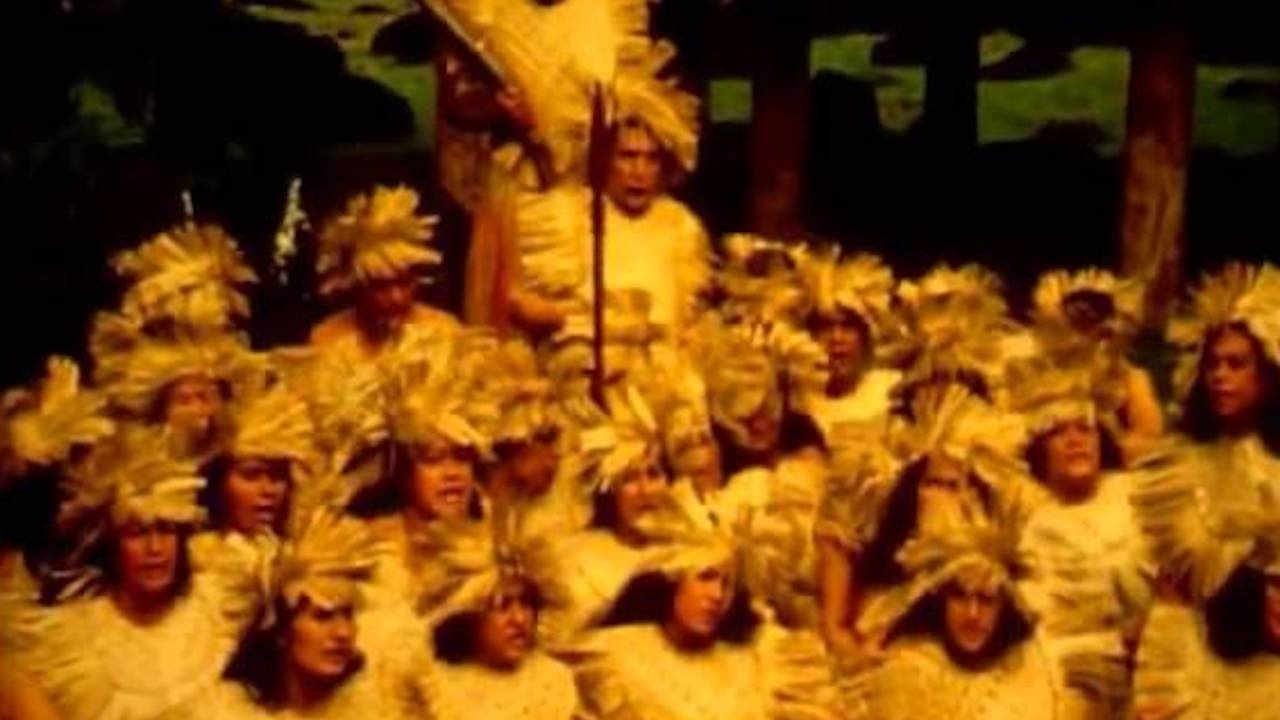



Filmed between 1980 and 1983, Tärava is considered the founding work of documentary cinema in Tahitian and embodies the link between the Polynesian and his ancestral land. To the rhythm of songs, hïmene tärava, the film takes us to discover our mountains and our valleys, and the story of the birth of the tärava. Filmed by Henri Hiro, Angelo Oliver and Harris Aunoa, Tärava looks back on the period during which missionaries settled in Polynesia. They never ceased to prohibit traditional songs and dances because they expressed in their eyes the perversions and lust of these pagan peoples. Drums and flutes, the basic instruments of Polynesian music, were thus banned. Only choral singing was permitted.
A family drama is woven with quiet yet powerful forces of words and nature.
Love is Blind Season 2 is the perfect reality show to tie a viewer over until the next season of Bridgerton. Check out Love is Blind Review Season 2
"Ladies First" has a fundamental misunderstanding of what's feminine because of the patriarchy and what women do because they genuinely enjoy it.
"WHAT ARE YOU WILLING TO SACRIFICE?!!!!" "EVERYTHING!!!!!" This is but one of a multitude of highly emphatic questions, and subsequent answers, being asked in the newest feature film from one of the current masters of horror, Jordan Peele ("Get Out", "Us" and "Nope"). I must give Peele credit in that he continues to push the boundaries of specific genres and their associated tropes in order to provide what ends up amounting to subtly then jarringly intense, yet still character and story-driven, cinema that speaks more to indie stylings than mainstream.
With so many Disney remakes out and about in the world and loosed upon Hollywood cinema, there is one Disney film that truly needs to be seen and witnessed on the big screen: Princess and the Frog.
Cord Jefferson's hilarious and thought-provoking film continues a long-standing cinematic tradition, expanding the conversation around the impact of systemic racism in today's media.