
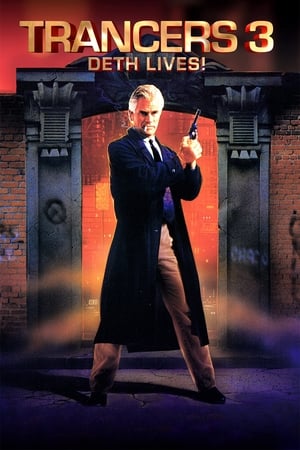
Trancers III (1992)
A time traveling cop, Jack Deth, from the future is taken back to the past to be given the task of destroying the Trancer program before it has a chance to get out of control, sending the world into a state of chaos and war.

- / 5
PopScore
Representation
Pictures and Videos

Movie Information
A time traveling cop, Jack Deth, from the future is taken back to the past to be given the task of destroying the Trancer program before it has a chance to get out of control, sending the world into a state of chaos and war.
Rating:R
Genre:Action, Science Fiction, Thriller
Written By:C. Courtney Joyner
In Theaters:10/14/1992
Box Office:
Runtime:74 minutes
Studio:Full Moon Entertainment










Articles You May Like
Travel Restrictions? No Problem. Travel Through Movies!
If you're missing the freedom of travel, explore the world via these international films that put their gorgeous settings in the spotlight.
An exploration of societal expectations and madness: Die My Love (2025)
It’s been awhile since I’ve seen a film that is jarring within the first five minutes. Being at the edge of my seat from the very beginning made me feel both excited and frightened for what was to come, and it did not disappoint. Led strongly by Jennifer Lawrence as Grace, a woman trapped in the “American dream”, this film shows that society tells us what should make us happy. Many critics describe Die My Love as being about post-partem depression, but it is so much more. After moving to a secluded home with her husband Jackson, Grace finds herself in the throes of motherhood. Feeling isolated in her physical environment and her romantic relationship, Grace suffers psychologically. Lawrence brings a sense of rawness and humor to the screen that is often uncomfortable. Robert Pattinson adds to the discomfort as her loving, yet lost husband Jackson, who cares about his wife but does not know how to help her. Lynne Ramsay has presented a film that forces us to look at the realness of life, and what happens when the promise of what should make you whole fails.
Quintessential Directors: Barry Jenkins
A brief look at two Barry Jenkins films that have established him as one of the greatest filmmakers of our time.
No Rules in 'Fair Play'
Rules are nowhere to be seen in the harsh unfiltered reality of ‘Fair Play.’
“Boy”
Slip on your favorite dungarees and spend the day on the east coast of New Zealand before the 90s.