



A Haunting Portrayal of Motherhood in "The Lost Daughter"
'The Lost Daughter' doesn't paint over the choices Leda and Nina make as mothers as right or wrong but examines the messy in-between.
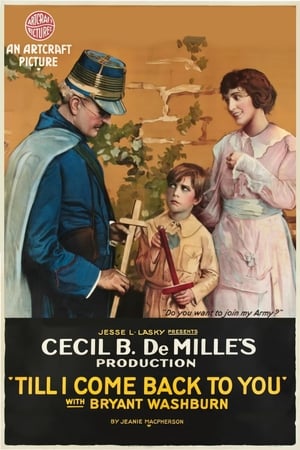


Yvonne von Krutz, a Belgian, lives with her German husband Karl, whom she was forced to marry, and her spirited little brother Jacques in a farmhouse on the Belgian countryside. With the German invasion of Belgium, Karl joins the German forces, and Jacques is taken to a reformatory to be trained as a munitions worker. When Karl is taken prisoner, Capt. Jefferson Strong, an American engineer, assumes the German's identity and discovers an underground supply of explosives near the von Krutz farm. By means of a tunnel, the Americans plan to mine the explosives. To save Jacques and a group of children from the munitions factory, however, Jefferson sends them across the American lines through the tunnel, but they lose their way, and he is forced to disable the mine. Jefferson is court-martialed, but King Albert of Belgium, who has befriended little Jacques, intercedes on his behalf. Learning that Karl has been killed, Jefferson pursues his budding romance with Yvonne.
'The Lost Daughter' doesn't paint over the choices Leda and Nina make as mothers as right or wrong but examines the messy in-between.
Emily and Stephanie are back... just add gin and drama.
When diverse representation is featured on-screen, it oftentimes comes with strings attached that undermine the message they were trying to send. This can be attributed to the fact that behind-the-screen, the industry primarily does not reflect the breadth of diverse difference that is present in daily life. That’s why when something as powerful and authentic as Minari comes along, it is both incredibly wonderful and needs a large audience to witness it.
A film for the post-MeToo era that inverts the narrative with an ironic coda, Tár depicts the duality of a sensitive artist capable of great evil and vile manipulation.
The Mandolorian has a more nuanced and commentative take on masculinity that refrains from praising the toxic traits associated with the social category, while also showing a more positive and transformative representation of masculine characters.
Eloquent and informative, Hajera Sheikh’s documentary Kathak: Dancing With Taboos tells a story of love for one’s culture and perseverance through adversity.