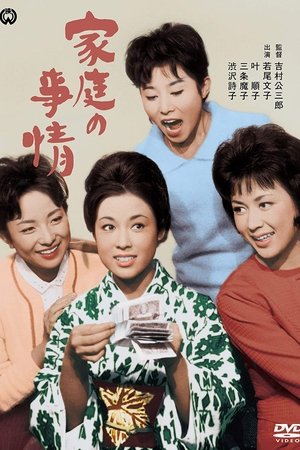
Their Legacy
Heitaro, who had served his firm loyally for 30 years, reaches the retirement age. He has four unmarried daughters and decides to split his retirement allowance he has received from his firm into 500,000 yen for each daughter as a wedding dowry. He considers them all old enough to handle the money, and gives them a free hand to use it as they wish.

- / 5
PopScore
Representation
Pictures and Videos

Movie Information
Heitaro, who had served his firm loyally for 30 years, reaches the retirement age. He has four unmarried daughters and decides to split his retirement allowance he has received from his firm into 500,000 yen for each daughter as a wedding dowry. He considers them all old enough to handle the money, and gives them a free hand to use it as they wish.
Rating:
Genre:Drama, Comedy
Written By:Kaneto Shindō
In Theaters:
Box Office:
Runtime:93 minutes
Studio:Daiei Film










Articles You May Like
"First Girl I Loved": A Well-Intended but Ultimately Flawed Story of Identity
Despite its glaring flaws, First Girl I Loved is not entirely undeserving of a watch. For people who can handle the more difficult aspects of the story and graphic scenes, it is worth looking into. It’s not a film worthy of rewatch, but it may still resonate somewhat with those who need a story like this. It is a genuine, if flimsy attempt at a coming-of-age tale. Were the film to be directed by someone with experiences more similar to Anne, it would likely be more powerful--as it is, it feels like a man’s perspective of what it means to come to terms with your identity as a lesbian.
'Jack and Diane' Review: Wasted Potential
The plot could’ve really been interesting if the elements of lycanthropy was integrated with perhaps the struggle of identity of being LGBTQ+. It's an experience for so many that as they’re starting to realizing their true selves, they feel like a monster, especially if they come from unsupportive homes or communities. Instead, the horror and transformation elements seem thrown in without contemplation of how this could deepen the narrative.
Coming Together for 'Thirteen Lives'
'Thirteen Lives' gives a dramatic adaptation of a humanitarian triumph that captured the global imagination.
"The Father" Movie Review
What Kind of Movies Will Come from the Current Anti-Racism Movement?
Given Hollywood's history of racism and financial motivations, how much progress can we expect? Plus: a list of excellent films by Black directors.