

Russian Doll Season 2: A Bit Late to the Party
The second season arrives over three years after its first. While late on arrival, most audience members will be happy.
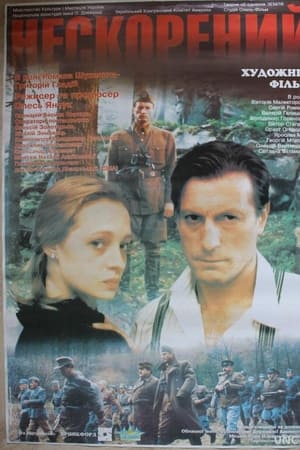


In 1950, long after the world has finished fighting World War II, a fight continues behind the newly drawn Iron Curtain: as the Ukrainians keep fighting both Nazi and Soviet abuses, General Roman Shukhevych (Hryhoriy Hladiy) is forced by brutal circumstances and his own sense of honor and duty to lead this effort as an underground war. As portrayed by the film, Shukhevych is a genteel family man who is also a complex character (revolted by ethnic discrimination, a music lover and a military genius) that with his charisma fuels his countrymen with desire for freedom. In the end, Shukhevych's efforts are unable to defeat the Soviets despite paying for his resistance with his life, but they re-enforce Ukrainian patriotism as an underground force until Ukraine finally recovers its freedom from Soviet tyranny.
The second season arrives over three years after its first. While late on arrival, most audience members will be happy.
When science, Bruce Banner is exposed to gamma radiation from his experiment, he transforms into a gigantic green monster when he gets angry and wreaks havoc wherever he goes.
It doesn’t offer an absolute answer for the dialectical ethical questions that emerged in search of justice but portrays the characters as living people beyond the identities of victims.
We chat with Penelope Lawson about her short film, The Dinner Party, her experience founding her own production company, and fun cinema.
Even with its straightforward premise, “Richard Jewell” is ramped up by exceptional drama. In all honesty, the performances are out of this world. As Jewell, Paul Walter Hauser becomes a walking representation of gullibility. His bumbling antics create the perfect hero, and very quickly, we feel the societal heat that surrounds our protagonists.
Masterful satire that shines a light on the struggles of Black creatives.