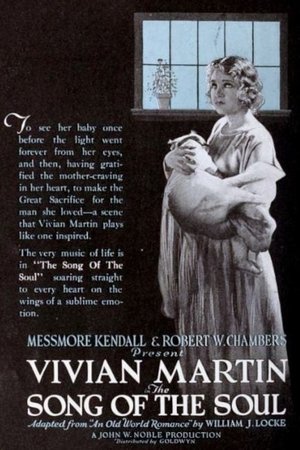
The Song of the Soul (1920)
Jerry Wendover, disfigured since childhood after his act of heroism in saving a little girl from a fire scarred his face, secludes himself in an old house in the Backwater district of Florida. One night he finds Barbara Seaforth, a young blind girl, lost in the swamps and takes her home. The two unfortunates fall in love, marry, and have a child. One day, a visiting doctor tells Jerry that Barbara's sight can be restored. The operation is performed successfully, but the doctor warns his patient to shield her eyes from the light or risk reversal of the surgery. Barbara, realizing her husband's dread of exposing his disfigurement to her, looks at her child and then permanently blinds herself by staring into the light, thus sacrificing her sight for the love of her husband.

- / 5
PopScore
Representation
Pictures and Videos

Movie Information
Jerry Wendover, disfigured since childhood after his act of heroism in saving a little girl from a fire scarred his face, secludes himself in an old house in the Backwater district of Florida. One night he finds Barbara Seaforth, a young blind girl, lost in the swamps and takes her home. The two unfortunates fall in love, marry, and have a child. One day, a visiting doctor tells Jerry that Barbara's sight can be restored. The operation is performed successfully, but the doctor warns his patient to shield her eyes from the light or risk reversal of the surgery. Barbara, realizing her husband's dread of exposing his disfigurement to her, looks at her child and then permanently blinds herself by staring into the light, thus sacrificing her sight for the love of her husband.
Rating:NR
Genre:Drama
Written By:Robert W. Chambers, John W. Noble
In Theaters:10/5/1920
Box Office:
Runtime:50 minutes
Studio:Kendall-Chambers
Cast





Articles You May Like
“I’m Just F*cking With You": Hulu’s Gruesome Take on April Fools’ Day
An excellent exploration of taking a joke too far.
An Interview with Writer/Director Albert Acosta
We sat down with Writer/Director Albert Acosta to discuss his debut short film, (ha-ha), Acosta's foray into narrative cinema, and how his personal experiences have shaped his filmmaking philosophy.
13: The Musical About Making New Friends
Evan Goldman, a child of divorced parents, is planning a memorable bar mitzvah for his 13th birthday. However, middle school has a few obstacles along the way.
Freakier Friday: Maybe It Was Freaky Enough the First Time?
If a movie about a strange and crazy day is commercially successful, why not recycle it and double the kookiness quotient? That seems to be the logic behind this followup to Freaky Friday.
5 Great but Rather Unknown Science Fiction and Fantasy Movies Directed by Women, Starring Women
The genres of science fiction and fantasy are not exclusively masculine territory. Over the last few decades, female directors have brought to the screen some of the most visually stunning, intellectually daring, and deeply moving works of speculative fiction. From big Hollywood productions like Wonder Woman and Captain Marvel to independent low-budget films, women filmmakers are making a name for themselves around the world.