










Mortal Kombat: Scorpion’s Revenge Gives Fans a Gory Good Time
Ever since the mid-’90s, the Mortal Kombat game franchise has seen multiple attempts to make it on the big screen, or at least adapted into other media.
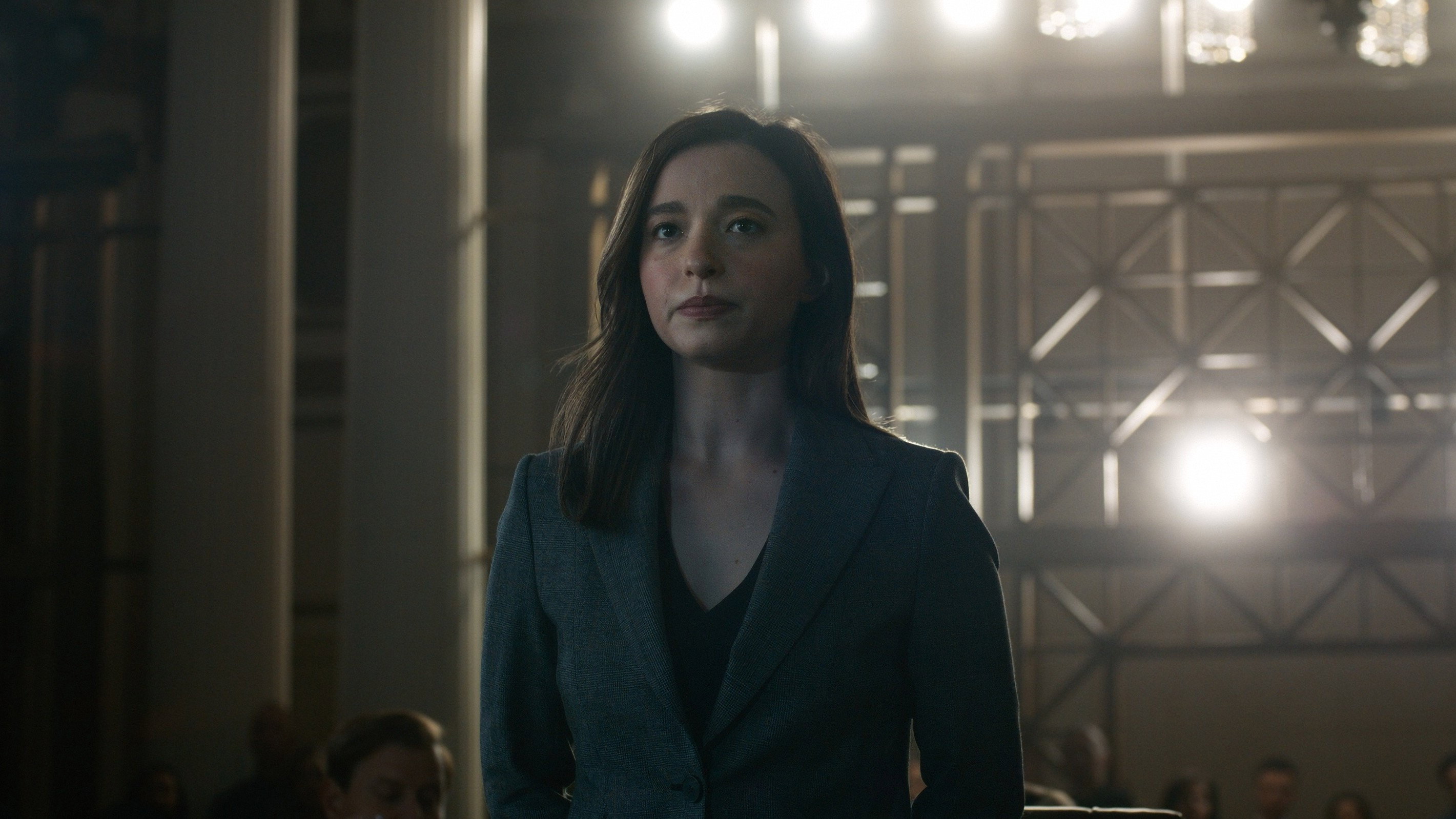
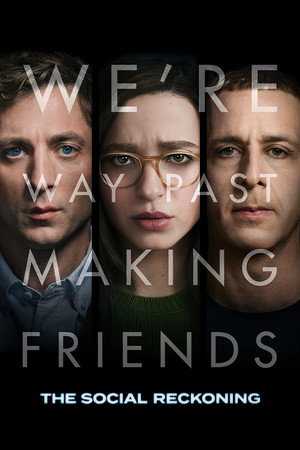


Aaron Sorkin’s newest film, the follow-up to the widely acclaimed The Social Network, is just as much a movie as it is a speech. It is a speech about how social media companies prioritize profits, and, as a result, amplify hate speech at the expense of morality and society. This hypothesis is, of course, not without merit. It is an accurate description of what is happening. But what would have been more interesting than a hypothesis would have been a conversation. While this film thinks that it is diagnosing the cause, it is merely diagnosing a symptom instead.
Go back to the previous paragraph and read it more carefully. Do you see something weird? It states that, in order to maximize profits, Facebook amplifies hate speech. Investigate that statement. It implies that amplifying hate speech creates more profits. It implies that hate speech is profitable.
That is what Aaron Sorkin’s film refuses to acknowledge, while it is simultaneously integral to his hypothesis. Facebook is not a communication, rather, it is a means of communication. It is not meaningfully contributing to political conversation, it is the space where the political conversation happens. It is not fabricating hate speech, even if it is amplifying it. The reason that hate speech is so effective at generating Facebook profits is because people like it. At least enough people that the biggest website in the world can make a profit off of it.
This doesn’t come from nowhere. The difficult truth we must acknowledge as a society is that when someone is radicalized, they aren’t being mind-controlled. They are instead being manipulated to entertain thoughts that already existed in their mind, or attitudes that already existed in their hearts. That is why there are so many extremist ideologies rather than just one that is the most effective. It is also why there are so many people who don’t get radicalized despite using social media, because these attitudes aren’t in the hearts of those people in the first place. It is impossible to radicalize someone who has no inclination to being radicalized. Radicalization is merely fertilization of an egg.
The Social Reckoning very explicitly advocates for government control over social media platforms. That is all fine and good, but the law of supply-and-demand persists. If there is a demand for hateful speech, it will be supplied. If Facebook and TikTok and X all go away, something else will take its place. The Social Reckoning gets the causal relationship backwards: Facebook doesn’t make people hateful, people make Facebook hateful. The main reason we are seeing more polarization in society now is because we are seeing people’s subconscious thoughts move to their conscious identity.

Frances Haugen, a young Facebook engineer, enlists the help of Jeff Horwitz, a Wall Street Journal reporter, to go on a dangerous journey that ends up blowing the whistle on the social network's most guarded secrets.
Ever since the mid-’90s, the Mortal Kombat game franchise has seen multiple attempts to make it on the big screen, or at least adapted into other media.
White audiences saw Peola’s mixed-race passing as a Black woman’s struggle to be white. Black audiences saw it as the rebellion of a Black woman trying to gain privileges only given to white people.
Complex relationships between mothers and daughters are far from a new concept, whether the strain comes from abandonment, beliefs, or trauma. In My Only Wish, an Incluvie Film Festival submission, Brenda Gutierrez’s take on her character’s maternal divide comes in the form of abandonment.
We can criticize depictions from old media, but they weren’t simply “good for their time”. They were fighting and struggling in a world we can’t imagine.
Not only does the system prevent upward mobility, but it makes it incredibly easy to slide from comfortably middle class to unhoused.
While it is more than established that Halston’s life is far from a fairytale, the narrative suffers as a result of the decision to revolve more around sex and drugs than his artistry, it likely does a disservice to his cultural impact by pulling focus from his achievements.