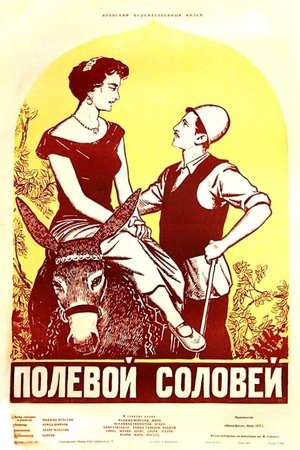
The Nightingale of the Farm
A young peasant named Shirzad worked as an estate manager. The owner of the estate arrived here for the summer with his son Irdaz and daughter Zohra. Irdaz took a liking to the manager's sister Golnaz, and Shirzad to Zohra. Soon, a deep feeling of true love bound the two couples together. The landowner offered Shirzad a large ransom for his sister. But the young man refused—it is not customary among the people to give girls away for money, but rather to exchange them. Shirzad asked for Zohra's hand in marriage. The landowner agreed, but on the condition that Shirzad spend 25,000 tumans on his wedding. But where could a poor man get such a sum?

- / 5
PopScore
Representation
Pictures and Videos

Movie Information
A young peasant named Shirzad worked as an estate manager. The owner of the estate arrived here for the summer with his son Irdaz and daughter Zohra. Irdaz took a liking to the manager's sister Golnaz, and Shirzad to Zohra. Soon, a deep feeling of true love bound the two couples together. The landowner offered Shirzad a large ransom for his sister. But the young man refused—it is not customary among the people to give girls away for money, but rather to exchange them. Shirzad asked for Zohra's hand in marriage. The landowner agreed, but on the condition that Shirzad spend 25,000 tumans on his wedding. But where could a poor man get such a sum?
Rating:
Genre:Drama, Romance
Written By:Majid Mohseni
In Theaters:
Box Office:
Runtime:
Studio:Diana Film




Articles You May Like
Bergman Island Offers Ingmar Bergman’s Take on the Twenty First Century In Its Own Way
It’s the most loving tribute to cinema and to Ingmar Bergman, set in world that feels so habitable that I felt like only re-watching this for eternity, because of how inviting it looks and feels.
"Inside Llewyn Davis" Is a Stunning, Melancholic Tale of Failure
‘She-Ra and the Princesses of Power’, a Worthwhile Watch to Celebrate Pride Month with the Whole Family!
An aspect of She-Ra that I find refreshing is even though a large portion of the cast is on the LGBTQ+ Spectrum, being gay is never mentioned. While this might initially sound like a negative thing, in the show’s land of Etheria being on the gay spectrum is shown to be so common and normalized that straight isn’t the default. As much as there is to appreciate about narratives revolving around the obstacles that may come from being non-heteronormative, it’s nice to get immersed in a world where no one bats an eye at all to any sort of differing identity.
Cheaper By the Dozen: a 2022 Family-Comedy Remake
A 2022 remake of the previous films of the same name, but with a more diverse cast, increasing representation and diversity.
Sand Storm: A Look Into Bedouin Culture and the Pressure Women Feel to Keep Tradition Alive
This 2016 winner of an Ophir Award for Best Film focuses on the forbidden romance of a young, Bedouin woman and the ramifications it has for her family, her identity, and her culture.