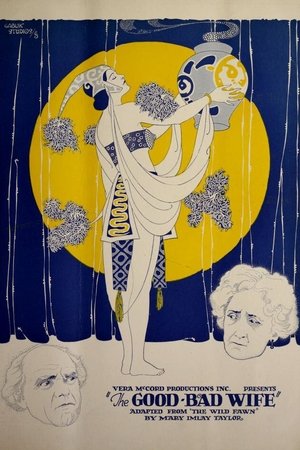
The Good-Bad Wife (1920)
William Carter, a young Virginian in Paris, becomes enchanted with music hall dancer Fanchon La Fare. After William reluctantly returns to America, Fanchon follows him, and when she is threatened with deportation because of an irregularity in her passport, William marries her. The marriage causes consternation in the upright Carter family, which is compounded when Fanchon performs one of her dances at a church benefit. At the conclusion of her dance, Fanchon sees a stranger in the audience and faints. Later, the same man appears at the Carter residence and demands to see her. Leigh Carter, William's younger brother, becomes angered and shoots the man. At the trial, Fanchon confesses that the stranger was her estranged husband whom she had been forced to marry when she was but a child. The crime thus clarified, Leigh is freed, and Fanchon, who had been expelled earlier from the Carter house, is welcomed back by her husband and his family. (Courtesy TCM)

- / 5
PopScore
Representation
Pictures and Videos

Movie Information
William Carter, a young Virginian in Paris, becomes enchanted with music hall dancer Fanchon La Fare. After William reluctantly returns to America, Fanchon follows him, and when she is threatened with deportation because of an irregularity in her passport, William marries her. The marriage causes consternation in the upright Carter family, which is compounded when Fanchon performs one of her dances at a church benefit. At the conclusion of her dance, Fanchon sees a stranger in the audience and faints. Later, the same man appears at the Carter residence and demands to see her. Leigh Carter, William's younger brother, becomes angered and shoots the man. At the trial, Fanchon confesses that the stranger was her estranged husband whom she had been forced to marry when she was but a child. The crime thus clarified, Leigh is freed, and Fanchon, who had been expelled earlier from the Carter house, is welcomed back by her husband and his family. (Courtesy TCM)
Rating:
Genre:Drama
Written By:Paul Price
In Theaters:10/1/1920
Box Office:
Runtime:70 minutes
Studio:Vera McCord Productions



Articles You May Like
Snow White, Rewritten in a Minor Key
Despite the film’s efforts to reframe its heroine with modern complexity, a certain emotional distance lingers.
Reclaiming Wanda for the Women: The Female Gaze in 'Multiverse of Madness'
The most divisive character in Multiverse of Madness is undoubtedly Wanda Maximoff. Is she good or evil? Is she "unlikeable?" I'm tired of the debate. I love Wanda because she's for us—she's for the women.
Eve and Villanelle's Bond Breaks Barriers in 'Killing Eve'
I’m still trying to comprehend the psychological and moral implications of their fascination with each other, or why their almost written-in-the-stars depth of connection makes so much sense.
Chasing Waves and Courage in Bethany Hamilton: Unstoppable
A documentary film about a disabled female athlete who builds courage within herself and seeks faith.
Netflix’s ‘Canvas:’ A Heartfelt Narrative About Love and Loss
Canvas illustrates the story of a grandfather who, after suffering the loss of his beloved, struggles to reclaim his love for painting.