




Incluvie – Better diversity in movies.
Identity in film with Incluvie stamps, scores, reviews.

Incluvie – Better diversity in movies.
Explore identity in film with Incluvie stamps, scores, reviews, and insights.

trailer banner
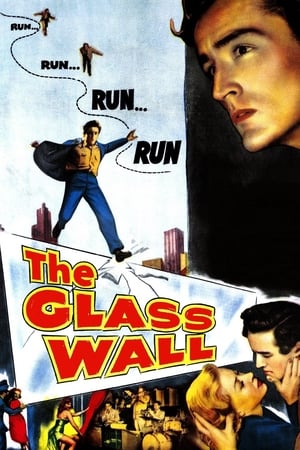
The Glass Wall poster

The Glass Wall (1953)

Peter Kuban, a Hungarian refugee, is about to be deported after jumping ship in New York harbor. He needs to find an ex-G.I. named Tom whom he helped during the war, as Tom can prove Peter's right to legal entry into the United States. If he can't find Tom within 24 hours and prove his case, he will be branded a fugitive and will be permanently disqualified for U.S. citizenship.
- / 5
PopScore
Representation

Pictures and Videos


Incluvie Gala

Movie Information


Peter Kuban, a Hungarian refugee, is about to be deported after jumping ship in New York harbor. He needs to find an ex-G.I. named Tom whom he helped during the war, as Tom can prove Peter's right to legal entry into the United States. If he can't find Tom within 24 hours and prove his case, he will be branded a fugitive and will be permanently disqualified for U.S. citizenship.

Rating:
Genre:Drama
Directed By:Maxwell Shane
Written By:Ivan Tors, Maxwell Shane
In Theaters:3/19/1953
Box Office:

Runtime:82 minutes
Studio:Columbia Pictures

Articles You May Like


Mississippi Masala: A Romance that Interrogates Racism from Within and Without

Some people’s first introduction to Mira Nair might be as New York mayor Zohran Mamdani’s mom. But with her insightful direction of 1991’s Mississippi Masala, Nair shows how much she deserves to be known as an artist. Delivering a nuanced portrait of a romance between a Black man and an Indian woman living in the South, Nair explores the complications each character faces, giving both equal weight.

Andrea Kreidler

"Him" - All Flash, No Game

Him is visually stunning—all concrete cathedrals and bone-rattling impact shots that look like a nightmare highlight reel. Marlon Wayans is magnetic as this legendary quarterback who's basically selling salvation with a smile that never quite reaches his eyes. But the story keeps running in circles: more tests, more cryptic pep talks, more ritualistic drills. The sports-as-religion metaphor beats you over the head when subtlety would've been more effective. The middle drags, and that finale chooses spectacle over substance. It's undeniably stylish, but left me cold. Also worth noting: despite the Monkeypaw connection, this isn't actually a Jordan Peele film—he didn't write or direct.

Nilufer Ozmekik