





Joanelle Romero Discusses Native Indigenous Representation
I have talked with founder of Red Nation Television Network, Joanelle Romero, and the future of Indigenous representation looks bright.

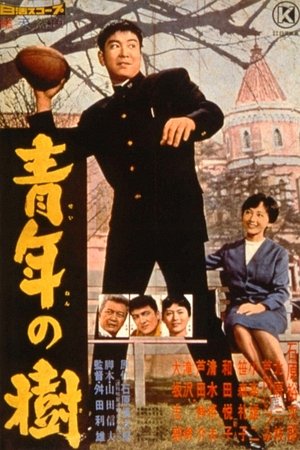


At Tokyo Gakuen University, Takema, son of Tatsunosuke, chief of the Waku gang, is a freshman who wishes to prepare himself for a better life away from gang activities despite the wishes of his father who wants him to assist strengthen the gang against the Kawano group. Takema's classmate, Akiko, is the daughter of Eiko who operates a restaurant, and through her he obtains a lodging in the house of Shiu, a dancing mistress. The students enjoy their life, but most have their troubles. Sakamoto works as a laborer on the docks to help pay for his schooling, and Akiko worries over the relationship between her mother and Sakurai, a corrupt politician, suspected to be involved in graft over jet aircraft.
I have talked with founder of Red Nation Television Network, Joanelle Romero, and the future of Indigenous representation looks bright.
A young boy who runs away from home discovers friendship when he befriends a young dragon in this animated movie.
For those that are unaware, the trailer for the new Civil Rights movie Till has been out and it's absolutely amazing for all to see.
This fantasy movie released on Disney+ has strong topics and themes related to magic.
To say Hollywood has had a troubled past is the understatement of the century. In Ryan Murphy’s (American Horror Story) new Netflix series, Hollywood, that past is confronted and even rewritten.
Strangers in a crowd, exchanging glances, looking away, continually managing to run into each other then part ways, end up at the same diner, find they've rented the exact same vehicles, and are then made to travel together to learn once more whether they can both find genuine adoration and companionship again. This really does, in so many words, sum up the foundational gist of of this new feature film from writer Seth Reiss ("The Menu") and director Kogonada ("The Acolyte", "After Yang"). Yet, it's all only the set-up for the REAL wonder of everything that happens before, during, and in the aftermath of a magical, meaningful journey.