
“Selena: The Series": A Disservice to Selena’s Legacy
'Selena: The Series' loses sight of the story's heart: Selena herself.
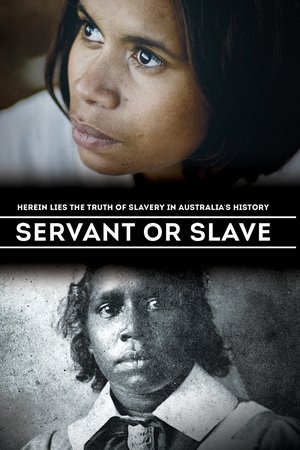


During the time of the Stolen Generations, thousands upon thousands of Aboriginal girls were taken from their families and pressed into domestic servitude by the Australian Government. They were supposedly employed as servants, but with total control over their movements, wages and living conditions, their lives all too frequently became an inescapable cycle of abuse, rape and enslavement, with consequences that echo powerfully to this day. Recounting the stories of five of these women – Rita, Violet and the three Wenberg sisters – Servant or Slave is a commanding piece of first-person testimony to a dark and unacknowledged corner of Australian history. Shot with admirable craft and humanity by documentarian Steven McGregor (Croker Island Exodus, MIFF 2012), Servant or Slave is a work of great sadness and urgency, bringing to forceful life the human tragedy of Australia's Indigenous history in the unadorned words of those who lived it.
'Selena: The Series' loses sight of the story's heart: Selena herself.
This horror movie combines elements of horror and babysitting with Black representation.
The most impressive aspect of this film is the honest and natural performances given by the on-screen duo.
When diverse representation is featured on-screen, it oftentimes comes with strings attached that undermine the message they were trying to send. This can be attributed to the fact that behind-the-screen, the industry primarily does not reflect the breadth of diverse difference that is present in daily life. That’s why when something as powerful and authentic as Minari comes along, it is both incredibly wonderful and needs a large audience to witness it.
It took writers D.B Weiss and David Benioff two years to give us a promising final season. Two. Years. It was just going to be six episodes, which was short considering that all the other seasons — except season 7 — were 10 episodes. 10. 6 wasn’t enough, and even HBO wanted to give the writers more episodes. More seasons, even. However, the writers wanted to get out of the show as quickly as possible to work on other projects. This abruptness is clearly shown in this season.
Tran Quoc Bao succeeds in telling us a story about martial arts, human decay, and friendship. The originality shown by his filmmaking is admirable and brings fresh air to the classic Chinese martial arts genre.