




“Selena: The Series": A Disservice to Selena’s Legacy
'Selena: The Series' loses sight of the story's heart: Selena herself.
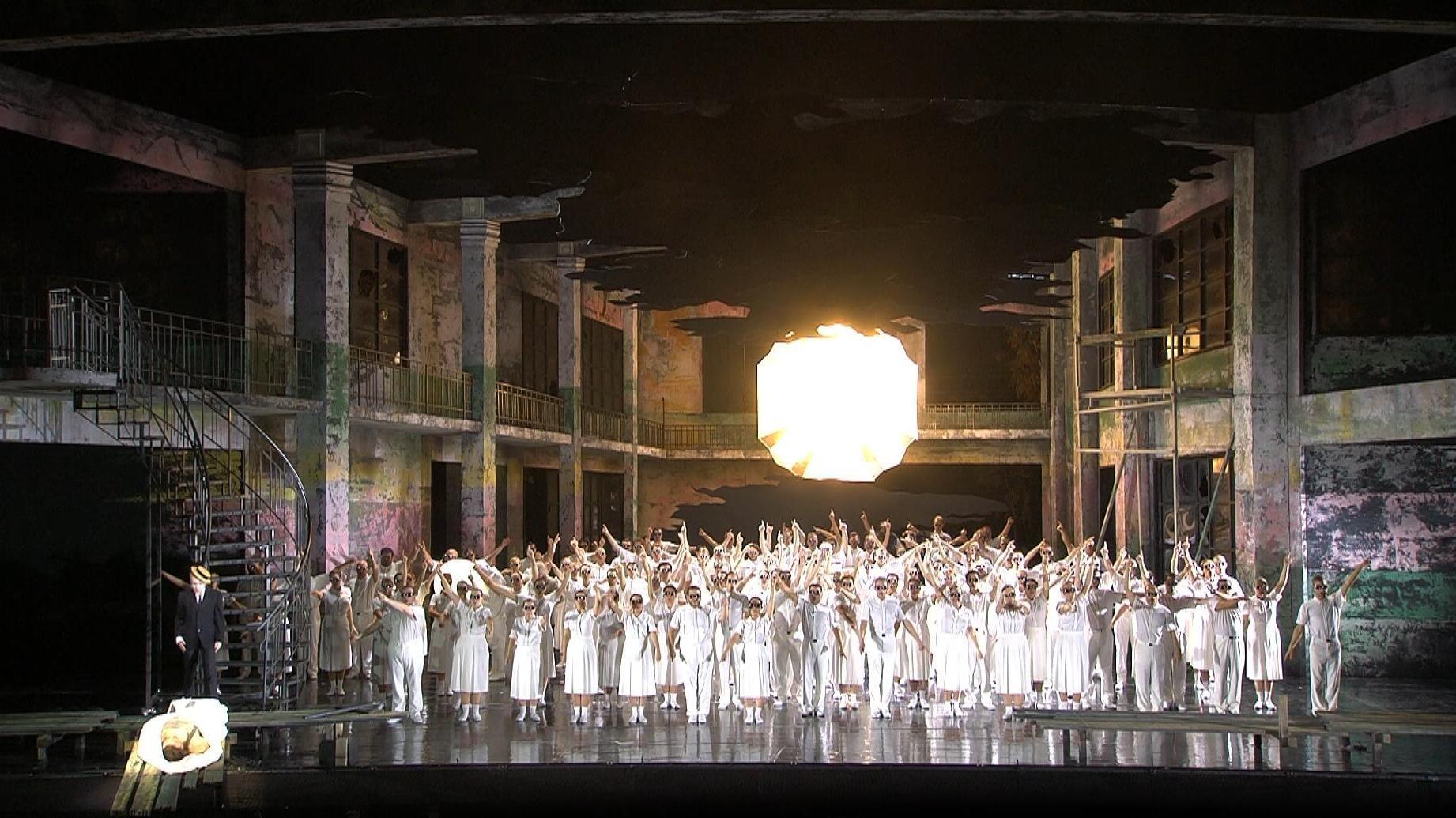



Rarely has a theatrical world premiere been so warmly received as Dutch National Opera’s production of Arnold Schönberg’s late-Romantic Gurre-Lieder in 2014. The production fulfilled a fervent wish of principal conductor Marc Albrecht. The music of Gurre-Lieder is timeless, and so is its subject: a passionate, yet forbidden love. The story harks back to a Scandinavian saga, situated in Gurre. King Waldemar loves the girl Tove, who is a mysterious character, connected to both the world of people and the world of birds. The queen is jealous and has Tove killed. The Wood Dove tells of this in a moving song and the king accuses God of cruelty. A nightmarish scene follows, of a fierce army killed in battle, which rampages like a horde of ghosts. The radiant dawn at the end of Gurre-Lieder shows the insignificance of human destiny compared to the power of nature.
'Selena: The Series' loses sight of the story's heart: Selena herself.
'The Suicide Squad' is at its best when it focuses on its characters and commentary on real-life issues, but stumbles when it relies too heavily on gratuitous gore and insensitive humor.
An original animated movie in the Wimpy series based on the book Cabin Fever.
Many have interpreted Maya Deren’s Meshes of the Afternoon as a dream sequence, but what if the repetitive scenes we are given are not dreams but, a time loop.
With a cast of exceptional and exclusively openly gay actors, "Boys In The Band" takes on themes of homophobia, racism, vanity, and substance abuse.
While the director didn't set out to make a feminist film, "A Girl Walks Home Alone At Night" reads as a reclamation of female power in a patriarchal society.