






Māhū—Reclaiming what’s rightfully theirs
Why did Māhū, a term once respected in Hawaiian culture, become so controversial?
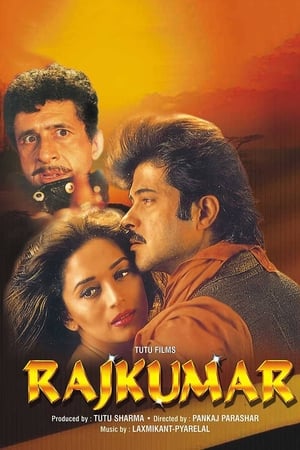


Rani Maa's(Reena Roy) husband is killed by the neighboring kingdom's evil Prime Minister Man Singh (Naseeruddin Shah). The Prime Minister absolves himself from this killing and blames it on the king, the father of Rajkumari Vishaka (Madhuri Dixit). Rani Maa swears to avenge the death against the Rajkumari. Man Singh also has a twin brother, Surjan Singh (also Naseeruddin Shah) who is not evil at all albeit a little naive. Rani Maa is shocked and aghast when she finds out that her only son, Rajkumar (Anil Kapoor) is in love with Rajkumari. She sets out to oppose this marriage, while Rajkumar will leave no stone unturned to marry Rajkumari. The stage is set for mother and son to decide whether it is in their best interest to include someone in the family, who has killed a husband and a father respectively.
Why did Māhū, a term once respected in Hawaiian culture, become so controversial?
Even now, the well-established Snyder has yet to learn this as he continues to allow misguided decisions to convince him that his projects hold the same kind of intelligent and emotional weight. Army of the Dead is a tonal mess, one that never decides what it’s trying to be, and, for all we know, doesn’t want to decide.
Rare in the days of franchise sequels and indie horror films that dominate the screen in 2026, Netflix’s latest original release, Remarkably Bright Creatures, is a feel-good family movie that leaves nothing to be desired except tissues. Starring Sally Field and Lewis Pullman as two cleaners at a small-town aquarium, Remarkably Bright Creatures reminds viewers that humans are social animals whose strength comes not from our intelligence or our opposable thumbs, but from each other.
"WHAT ARE YOU WILLING TO SACRIFICE?!!!!" "EVERYTHING!!!!!" This is but one of a multitude of highly emphatic questions, and subsequent answers, being asked in the newest feature film from one of the current masters of horror, Jordan Peele ("Get Out", "Us" and "Nope"). I must give Peele credit in that he continues to push the boundaries of specific genres and their associated tropes in order to provide what ends up amounting to subtly then jarringly intense, yet still character and story-driven, cinema that speaks more to indie stylings than mainstream.
A commentary on the exploitation of the elderly fueld by the inherent greed of capitalism.