The Suicide Squad—An Overlooked and Underrated "Sequel"
Since Season 2 of Peacemaker is currently airing, let’s revisit the movie that started it all.

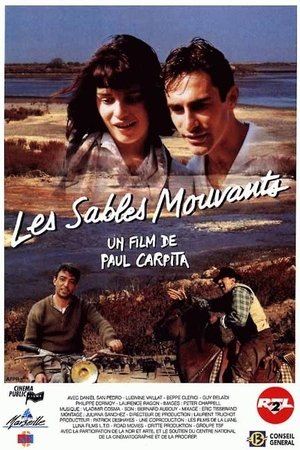
Set in France's Carmargue area during the late 1950s, this provocative, powerful drama chronicles the labor dispute between an exploitative farmer and his newest worker, a Spanish emigrant who turns about to much more than he first appears. Manuel comes to Roger's spread in 1958 to plead for employment. Roger is impressed by the well-spoken, seemingly well-educated Manuel, who is also an excellent mechanic and gives him work and a cabin that he will share with the naïve Mouloud. Manuel turns out to be a man with a secret and when Roger learns of it, he attempts to blackmail Manuel, who in turn learns a few of Roger's secrets thereby creating a stalemate that ends tragically after the arrival of Manuel's old-time friend Antonio, who starts a fracas by leading a strike against Roger. The title refers to the deadly sand traps found within the surrounding marshes. They have already claimed the lives of two people before the story began and by its end, the traps will claim more lives.
Since Season 2 of Peacemaker is currently airing, let’s revisit the movie that started it all.
At its heart, it’s a fond tribute to an influential artist and thus one that can speak to everyone’s inner artist, even if it lacks the sincere commentary you may wish to see.
The second entry of the Five Nights at Freddy’s series released recently, garnering very divisive reviews amongst both fans and critics.
The film does not add anything to its own conversation or genre, and falls flat once it’s about to end and must declare some sort of conclusion.
Ruben Östlund muses about his characters, “As soon as you get close to a person, you see them as just another human being”. It is widely recognized that aboard the luxury yacht in ‘Triangle of Sadness’, the different groups of people represent a small society as a commentary on classism and gender binaries.