


'American Fiction' Speaks Truth
American Fiction is a genuinely entertaining film with a few lessons.
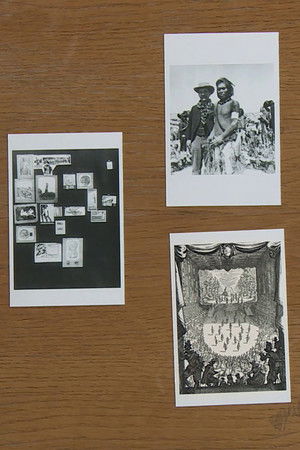


To be in Venice and see the architecture of New York, to perceive in a painting by Tintoretto the birth of animated images, to look at the burlesque Cretinetti as the ancestor of montage - so many shifts, displacements, and striking telescopings that Philippe-Alain Michaud proposes in this film dedicated to him. To follow this art historian, curator of the cinema collections at the Centre Pompidou, is to go from the oriental carpet to the film, or from the first fireworks to the cinema. And everywhere the animation of the images - projections of Antony McCall, or of Paul Sharits, Column without end of Brancusi, Pasolini's Accatone - everything moves! Under the tutelage of Aby Warburg, the great art historian of the early twentieth century, precursor of iconology and image comparison, to whom Philippe-Alain Michaud was the first in France to devote an important essay, eleven images are placed on the table to describe the singular journey of this art historian.
American Fiction is a genuinely entertaining film with a few lessons.
“Trust your gut" is one of the most common pieces of advice you’ll receive during your lifetime. And as a person inclined to trust my intuition above all else, it’s the most common advice I find myself giving in real life and in my online socialising. But what happens when your gut is trying to warn you that something is seriously wrong without you being able to identify what triggered it in the first place? How can you act on a feeling or make it go away when you don’t have a clue about what could be wrong? How can you trust your intuition when you don’t know what makes it act out in the first place?
In the film adaptation, director Jon M. Chu turns each musical number into a massive show stopper, with grand set pieces and a wealth of diverse dancers. Yet, in this attempt to show reverence for the people of the Washington Heights barrio, Chu, or maybe more specifically those in charge of casting, left out a crucial part of the community, Afro-Latinos.
The “gay best friend”, an age-old trope, has been done in countless films and television series. Ranging from one-note (Sex and the City's Stanford and Mario) to nuanced (Unbreakable Kimmy Schmidt's Tituss), the gay best friend exists to support and advise the main protagonist, with their conflicts swept to the side.
A surprise sequel takes place ten years after the original movie based on the title of the same name, but with a twist to the fairy tale.
Want a list to watch the best animated Disney Movies With Diversity? This list of disney films details the best of the animated classics featuring cultural and racial diversity. Favorite movie quotes, songs and main voice actors!