

Incluvie – Better diversity in movies.
Identity in film with Incluvie stamps, scores, reviews.

Incluvie – Better diversity in movies.
Explore identity in film with Incluvie stamps, scores, reviews, and insights.

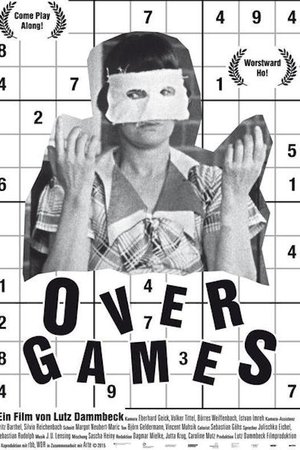
Overgames poster

Overgames 

On a talkshow, actor and German TV ikon Joachim Fuchsberger recalls how the games for his show "Nur nicht nervös werden" (Don't Get Nervous), first broadcast on West German TV in 1960, were developed along the lines of American psychiatry. Asked "So how many crazy people watched you?", he responded: "A whole crazy, psychologically disturbed nation". Why were the Germans or to be more precise, the West Germans, a psychologically disturbed nation at that time? This is a film about cheerful and serious games, therapies for re-education and self-imposed re-education, as well as the history of the idea of permanent revolution. Those appearing include directors and producers of gameshows, psychiatrists, anthropologists, and the diversely paranoid.
- / 5
PopScore
Representation

Pictures and Videos


Incluvie Gala

Movie Information


On a talkshow, actor and German TV ikon Joachim Fuchsberger recalls how the games for his show "Nur nicht nervös werden" (Don't Get Nervous), first broadcast on West German TV in 1960, were developed along the lines of American psychiatry. Asked "So how many crazy people watched you?", he responded: "A whole crazy, psychologically disturbed nation". Why were the Germans or to be more precise, the West Germans, a psychologically disturbed nation at that time? This is a film about cheerful and serious games, therapies for re-education and self-imposed re-education, as well as the history of the idea of permanent revolution. Those appearing include directors and producers of gameshows, psychiatrists, anthropologists, and the diversely paranoid.

Rating:
Genre:Documentary
Directed By:Lutz Dammbeck
Written By:Lutz Dammbeck
In Theaters:
Box Office:

Runtime:164 minutes
Studio:Lutz Dammbeck Filmproduktion, ARTE, RBB, WDR

Articles You May Like


An exploration of societal expectations and madness: Die My Love (2025)

It’s been awhile since I’ve seen a film that is jarring within the first five minutes. Being at the edge of my seat from the very beginning made me feel both excited and frightened for what was to come, and it did not disappoint. Led strongly by Jennifer Lawrence as Grace, a woman trapped in the “American dream”, this film shows that society tells us what should make us happy. Many critics describe Die My Love as being about post-partem depression, but it is so much more. After moving to a secluded home with her husband Jackson, Grace finds herself in the throes of motherhood. Feeling isolated in her physical environment and her romantic relationship, Grace suffers psychologically. Lawrence brings a sense of rawness and humor to the screen that is often uncomfortable. Robert Pattinson adds to the discomfort as her loving, yet lost husband Jackson, who cares about his wife but does not know how to help her. Lynne Ramsay has presented a film that forces us to look at the realness of life, and what happens when the promise of what should make you whole fails.

Ashley Delgadillo

Enola Holmes 3 Screws Up Its Main Character and Blows the Worldbuilding

Netflix’s recent Millie Bobby Brown vehicle, Enola Holmes 3, is a disappointing and confusing entry in the stellar Enola Holmes franchise. Directed by Philip Barantini, the film stars Brown as Enola Holmes, estranged sister of Sherlock Holmes, Henry Cavill as Sherlock Holmes, and Louis Partridge as her love interest, Viscount Tewkesbury. While it deserves credit for its exciting action scenes and attempts to expand the diversity of its Dickensian setting, the most recent entry in the series completely scuttles Enola’s underdog status from the first films that made her so charming and gave a touch of realism to the story of a young, unmarried woman living in London while self-employed as a detective.

Jo Moses