
“A Girl Walks Home Alone At Night”: A Powerful Look At the Exploitation of Women
While the director didn't set out to make a feminist film, "A Girl Walks Home Alone At Night" reads as a reclamation of female power in a patriarchal society.
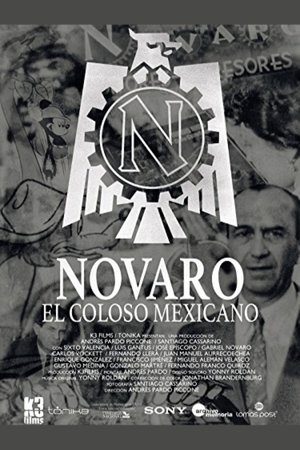


Novaro, the Mexican Colosus traces the unknown story of one of the greatest comic book publishers in the world, which reigned for more than 30 years before disappearing without saying goodbye in 1985. Their fans never understood what happened. Novaro only disappeared without leaving a trace. Only the comics remained.
While the director didn't set out to make a feminist film, "A Girl Walks Home Alone At Night" reads as a reclamation of female power in a patriarchal society.
Its predictability shouldn’t distract from the enjoyment that the pure cinematic imagination behind the camera elicits. It is a movie of crises both moral and mortal, oozing with CGI, and thoroughly enjoyable.
Deborah (Jean Smart) and Ava (Hannah Einbinder) are a delight to watch evolve, sometimes devolve, then evolve again.
At 2:17 a.m., every child in a third-grade class wakes up, leaves their home, and disappears into the darkness—except one. The next day, teacher Justine Gandy discovers that Alex Lily is the only student left, while the rest have vanished without a trace. Did Justine have something to do with it, or is a far more sinister force stalking the town, targeting not just children, but anyone in its path?
We got a movie that takes the old school approach of trying to creep you out with chilling atmosphere more than anything else.
The most divisive character in Multiverse of Madness is undoubtedly Wanda Maximoff. Is she good or evil? Is she "unlikeable?" I'm tired of the debate. I love Wanda because she's for us—she's for the women.