
“Concrete Cowboy” (2021) Review: An Endangered and Unknown Subculture
Ricky Staub’s Concrete Cowboy, based on Greg Neri’s novel "Ghetto Cowboy", tells the story of a young teenager forced to adapt to a new lifestyle.

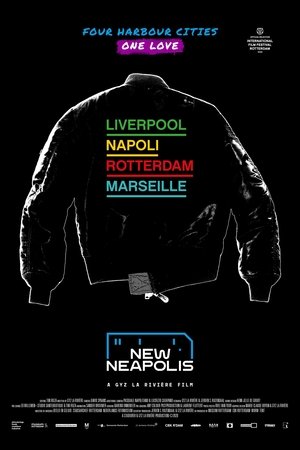


In a world where cities are becoming more important than countries, Rotterdam, Liverpool, Marseilles and Naples could form a 'cities gang'. All four are working class, multicultural and internationally oriented, and have been influenced significantly by urban planning and nineteenth-century and modernist urges to demolish. They share a clichéd sense of inferiority and often top 'the wrong charts'. They are currently undergoing an international re-evaluation, including ongoing processes of gentrification. Their shared characteristics could form the basis for a gang of cities capable of taking on the world. Or even showing the world how it could be done.
Ricky Staub’s Concrete Cowboy, based on Greg Neri’s novel "Ghetto Cowboy", tells the story of a young teenager forced to adapt to a new lifestyle.
"Thunder Road" presents the grief that comes from a family member taking their own life.
'Alice' is a genre trifecta: one part revenge drama, one part historical account, one part throwback to Blaxploitation—kinda 'Django' meets 'Roots' meets 'Foxy Brown.'
In Spike Lee’s She’s Gotta Have It (1986), we follow the love life of powerful female protagonist Nola Darling (Tracy Camilla Johns) and explore the relationship dynamics she has with her partners. She sees three men simultaneously: Greer Childs, (John Canada Terrell) Mars Blackmon (Spike Lee), and Jamie Overstreet (Tommy Redmond Hicks). Though an 80’s film, She’s Gotta Have It is surprisingly progressive with its themes of female sexuality, although at some points in the film it is handled clumsily. Overall Nola is an incredibly compelling character especially for modern women, as we as a society acknowledge female sensuality more and more without the negative stigma.
Seeing that the film was essentially his first big, mainstream feature, and with garnering a leading role — portraying the revolutionary ball-player Jackie Robinson — Boseman, without question, delivered a performance that is still so incredibly moving, respectful, genuine, and true to the core of his obviously sincere, artistic heart; and with that, it is indeed so saddening to see him pass.
I have been a long-time fan of the Marvel Cinematic Universe ever since it made its official debut through 2008's absolutely excellent "Iron Man". The run continued, as did my associated fandom of the films, through the utterly EPIC 2019 finale "Avengers: Endgame".