










'Alice' Doesn't Live Here Anymore
'Alice' is a genre trifecta: one part revenge drama, one part historical account, one part throwback to Blaxploitation—kinda 'Django' meets 'Roots' meets 'Foxy Brown.'

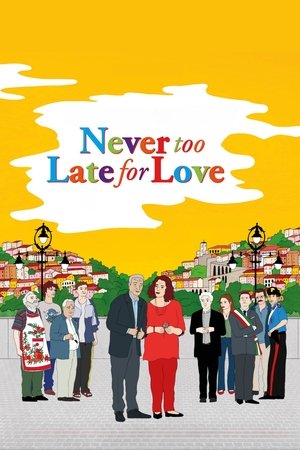


Astolfo, a retired professor evicted from his apartment, decides to move into an old noble but decrepit palace, the last remnant of his family patrimony in a remote village of Abruzzo, where he hasn't been for decades. Soon enough, as a newcomer, he befriends a vagabond, a retired chef and a young handyman. A group of four live harmoniously at his place when he comes across Stefania, a charming and generous woman of his age. Astolfo falls in love and struggles with feelings he thought belonged to the past. Encouraged by his loyal group, Astolfo makes a brave step and learns delightedly that it's never too late to fall in love.
'Alice' is a genre trifecta: one part revenge drama, one part historical account, one part throwback to Blaxploitation—kinda 'Django' meets 'Roots' meets 'Foxy Brown.'
'An American Werewolf in London' possesses a possible queer reading in the way it envisions a heterosexual romance being undone by the presence of a creature who embodies self-contentment in the face of social alienation.
(Disclaimer: Harmful Language) In celebration of Pride Month, Father's Day, and father figures (and whoever supports you), I revisit Moonlight's brief but spectacular character, Juan. With overarching themes tied to masculinity, I reexamine his intimacy with Little.
Sonic is a pretty generic buddy comedy with a light dusting of eccentricity.
Although Christmas is a time of year for love and cheer for all, holiday cinema has not always represented diverse communities. Being a holiday with Christian origins, much of its media consists of straight white families or straight white romances. Luckily, modern years have been bringing with them plenty of POC and LGBTQ+ representation that the holidays so desperately need.