





Ang Lee's 'Hulk': Bruce Banner's Inner Demon
When science, Bruce Banner is exposed to gamma radiation from his experiment, he transforms into a gigantic green monster when he gets angry and wreaks havoc wherever he goes.

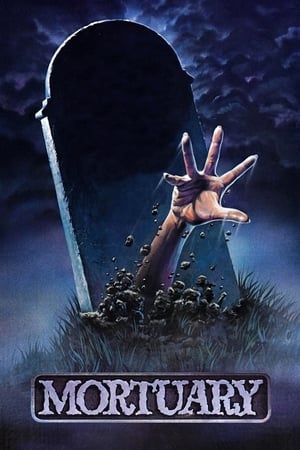


A young woman investigates the seemingly accidental death of her father, revealing many unsettling secrets and putting her in mortal danger.
When science, Bruce Banner is exposed to gamma radiation from his experiment, he transforms into a gigantic green monster when he gets angry and wreaks havoc wherever he goes.
Korean pop culture has mastered emotions as both a scientific field and an artistic revolution. Think of how K-Pop and K-Dramas have taken over the world. How? Simply put — they are addictive. How are they addictive?
Adrian Chiarella’s Leviticus is a beautiful, poignant, enraging, gut-wrenching, and heartbreaking film about the trauma and harm conversion therapy inflicts on young queer people. Even though its classification as horror holds, the emotional bond between the two main characters, Naim and Ryan, elevates the story into a realistic romantic drama on par with Eternal Sunshine of the Spotless Mind.
In Spike Lee’s She’s Gotta Have It (1986), we follow the love life of powerful female protagonist Nola Darling (Tracy Camilla Johns) and explore the relationship dynamics she has with her partners. She sees three men simultaneously: Greer Childs, (John Canada Terrell) Mars Blackmon (Spike Lee), and Jamie Overstreet (Tommy Redmond Hicks). Though an 80’s film, She’s Gotta Have It is surprisingly progressive with its themes of female sexuality, although at some points in the film it is handled clumsily. Overall Nola is an incredibly compelling character especially for modern women, as we as a society acknowledge female sensuality more and more without the negative stigma.
It’s been awhile since I’ve seen a film that is jarring within the first five minutes. Being at the edge of my seat from the very beginning made me feel both excited and frightened for what was to come, and it did not disappoint. Led strongly by Jennifer Lawrence as Grace, a woman trapped in the “American dream”, this film shows that society tells us what should make us happy. Many critics describe Die My Love as being about post-partem depression, but it is so much more. After moving to a secluded home with her husband Jackson, Grace finds herself in the throes of motherhood. Feeling isolated in her physical environment and her romantic relationship, Grace suffers psychologically. Lawrence brings a sense of rawness and humor to the screen that is often uncomfortable. Robert Pattinson adds to the discomfort as her loving, yet lost husband Jackson, who cares about his wife but does not know how to help her. Lynne Ramsay has presented a film that forces us to look at the realness of life, and what happens when the promise of what should make you whole fails.
Pressure is an unambiguously great movie, lead by convincing performances, a well-crafted script, good direction, and at least some social awareness.