
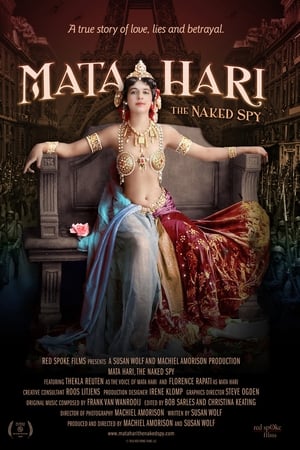
Mata Hari: The Naked Spy (2017)
100 years ago Mata Hari faced the firing squad as a convicted Dutch spy. It was at this moment that the legend of Mata Hari, the seductive spy, was born. Newly-discovered documents cast doubt on her guilt and reveal startling truths about her life. Mata Hari was a self-made woman whose boldness and sexuality threatened the male establishment. Most of what we've known about her until now has largely been myth. Mata Hari's challenges as an abused wife, single mother and a creative independent woman are familiar to women around the world. At the turn of the century, her struggles to attain sexual freedom, artistic expression, and liberation from the constraints of conventional society are the same ones women face today. She graced the cover of Vogue, performed all over Europe and left a coterie of smitten admirers in her wake.

- / 5
PopScore
Representation
Pictures and Videos

Movie Information
100 years ago Mata Hari faced the firing squad as a convicted Dutch spy. It was at this moment that the legend of Mata Hari, the seductive spy, was born. Newly-discovered documents cast doubt on her guilt and reveal startling truths about her life. Mata Hari was a self-made woman whose boldness and sexuality threatened the male establishment. Most of what we've known about her until now has largely been myth. Mata Hari's challenges as an abused wife, single mother and a creative independent woman are familiar to women around the world. At the turn of the century, her struggles to attain sexual freedom, artistic expression, and liberation from the constraints of conventional society are the same ones women face today. She graced the cover of Vogue, performed all over Europe and left a coterie of smitten admirers in her wake.
Rating:
Genre:Documentary
Written By:
In Theaters:10/15/2017
Box Office:
Runtime:78 minutes
Studio:Red Spoke Films, Ravin' Films



Articles You May Like
“Where Fireflies Dance”
An indie production of a romantic drama with a country-western feel meant to explore lost love.
The Truth is….The Good Liar Rocks
At first glance, “The Good Liar” is a respectable piece of fiction, starring Ian McKellen and Helen Mirren. But underneath everything, the film expertly hones the unpredictability of deceit.
Paul Thomas Anderson's "One Battle After Another", A Bold Exploration of Race, Immigration and America
Paul Thomas Anderson blends tragedy, comedy in 2025 epic, "One Battle After Another."
Sorry, Baby (2025) for Being Born a Woman
Written and directed by Eva Victor, who also plays Agnes, the main character, Sorry, Baby is slow and artsy, but extremely effective. It shows how the trauma developed after a sexual assault has a ripple effect and loudly echoes in the victim and her life for years after.
'Ralph Breaks the Internet' in the World Wide Web
Ralph and Vanellope unpack lots of surprises for those who love going on the Internet.