








‘Water Lilies’ and the Journey of Identity
A gentle coming of age story, Water Lilies takes its time in exploring what it’s like to be a young girl trying to make sense of her sexuality in a heteronormative world.

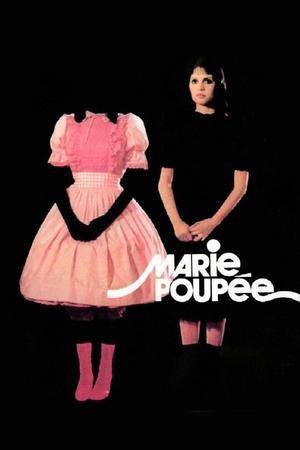


Marie, who was orphaned as a young girl, has a case of arrested development that makes her act younger than her age. One day she stops to look in a store window displaying various ornate dolls. Claude, the affluent, eccentric store owner, sees her and becomes infatuated which leads to her and him meeting and deciding to go and take a look at Claude personal doll collection at his house. Marie, unaware of Claude's bizarre obsession with dolls, decides to marry him.
A gentle coming of age story, Water Lilies takes its time in exploring what it’s like to be a young girl trying to make sense of her sexuality in a heteronormative world.
"His Girl Friday" set the bar for romcoms and gave us a feminist heroine before feminism was cool.
Striving for validation. Let’s be frank….we ALL want to be successful. Whatever we put our efforts into, ideally it is to make it culminate in the best possible results across the board, especially when it comes to what career path we are pursuing. We WANT to excel, to shine, to advance, to be acknowledged. AND…let’s hope that we also wish to better everyone around us to boot. However, what occurs when those whom we initially put our trust in suddenly become a burden instead of a boon? Do we falter under the weight of rejection? Or STAND UP for WHO WE ARE?
There were too many irrelevant parts that could have been shortened, and too many characters that didn't advance the plot. Either way, some things didn't add up. This was just another played out plot with little, if any, originality in it. By the end of the film, I wasn't happy that she finally got her freedom, I was happy that it was finally over.
There is a lot of controversy around Q-force. It’s certainly not hard to see why—the series is quite hyperbolic. I will say, that was the first aspect I noticed on my initial watch. Right from the get-go Q-Force barrages you with gay joke after gay joke. This is hit or miss throughout the series.
'Zero Refills' highlights the despicable treatment of the less fortunate by healthcare providers and big pharmaceuticals.