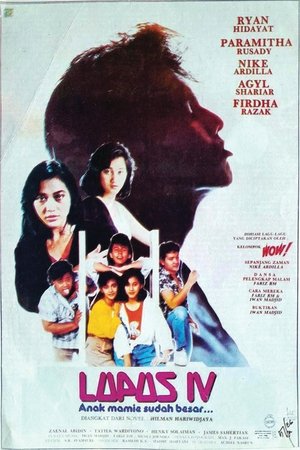
Lupus 4 (Anak Mami Sudah Besar)
After graduating from high school, Lupus was not accepted at a public university and forbade his mother to sell inherited jewelery so that Lupus could enter a private school and cover his debts. Lupus asks for a down payment from the magazine where he often writes with the promise of writing about teenage girls who like to come home early. He then interviewed and approached Pia {Paramitha Rusady} who went to the disco every night because the house was crowded. His widowed father only scolded him but was rarely at home. Disco is a place of entertainment. She's not like other disco girls, who are also sex-free etc. Writing about Pia had invited misunderstandings, so Lupus preached. And it is said that his father then wanted to change his attitude. Pia's story is intertwined with: catching frogs, applying for jobs that turn out to be unsuccessful.

- / 5
PopScore
Representation
Pictures and Videos

Movie Information
After graduating from high school, Lupus was not accepted at a public university and forbade his mother to sell inherited jewelery so that Lupus could enter a private school and cover his debts. Lupus asks for a down payment from the magazine where he often writes with the promise of writing about teenage girls who like to come home early. He then interviewed and approached Pia {Paramitha Rusady} who went to the disco every night because the house was crowded. His widowed father only scolded him but was rarely at home. Disco is a place of entertainment. She's not like other disco girls, who are also sex-free etc. Writing about Pia had invited misunderstandings, so Lupus preached. And it is said that his father then wanted to change his attitude. Pia's story is intertwined with: catching frogs, applying for jobs that turn out to be unsuccessful.
Rating:
Genre:Drama
Written By:Deddy Armand
In Theaters:
Box Office:
Runtime:94 minutes
Studio:PT Andalas Kencana Film







Articles You May Like
"Together" (2025) Film Review-Sticking together in relationship troubles takes a disturbingly extreme, eerily transformative path
This current year, as well as the past several, has seen a slowly building increase in something the horror genre has required for quite a while in this critic's opinion...originality. I've stated before that I am very hard to please when it comes to this vein of the film industry's offerings, always leaning more towards that which sends chills through my very being in lieu of buckets of blood and gore.
New Documentary "Pretty Ugly" Tells the Story of The Lunachicks
As one of the women said in the film, friendship in your teens is “as important as any lover” and it’s clear they lived that philosophy throughout their early adult lives as well.
Master: The Horror of Deceptive Racial Politics in Academia
“It's not ghosts. It's not supernatural. It's... It's America. And it's everywhere.”
The Women and the Murderer: Made by Women for Women
In The Women and the Murderer, directors Mona Achache and Patricia Tourancheau center women—the very demographic true crime is designed to appeal to.