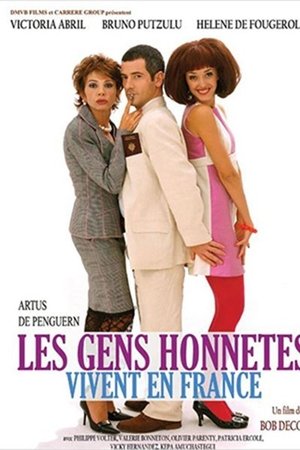
Les gens honnêtes vivent en France
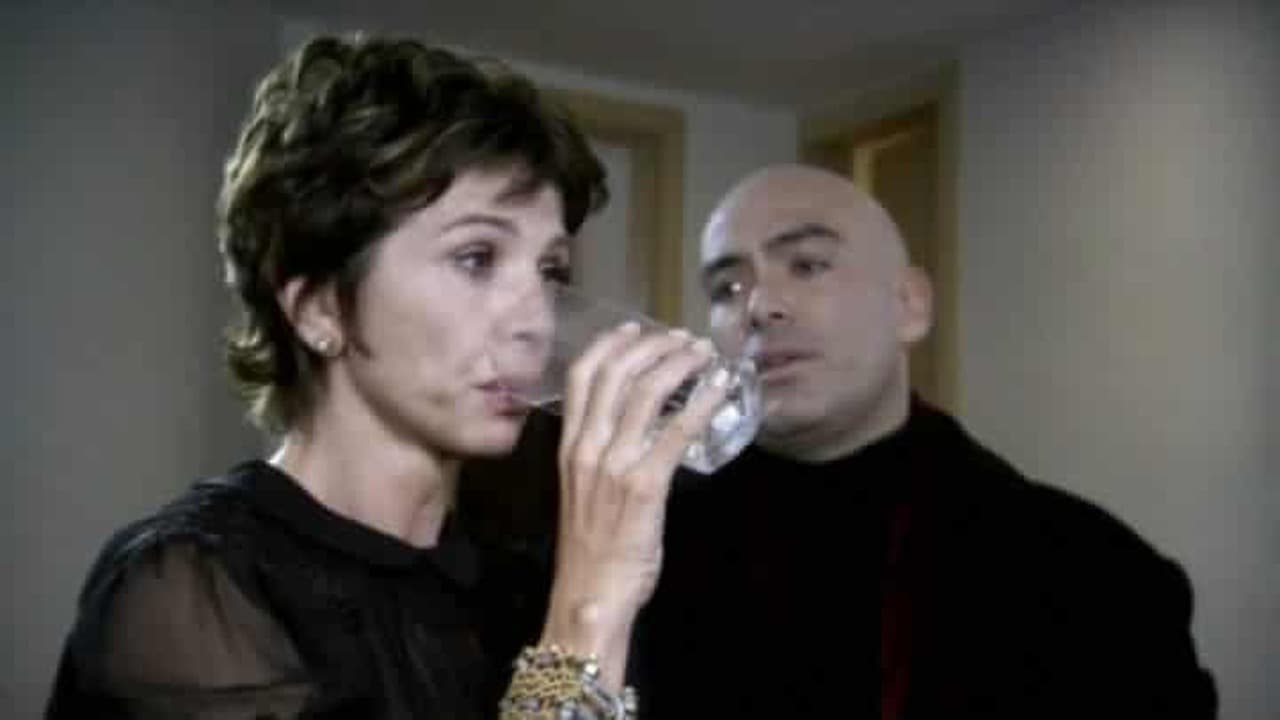
With a law degree and a modest job at a municipal library, Rodolphe leads a simple life, torn between his love for South American authors and his secret passion for his colleague Agnès. But she only likes messy relationships and prefers to throw herself into the arms of those who will humiliate her. Chance brings Rodolphe into contact with Aurore Langlois, a ruthless and unscrupulous PR agent who will stop at nothing to satisfy her excessive ambitions. Her current target is François Guerambois, a 45-year-old deputy mayor who is determined to enter the race for ministerial office at any cost... And since everything is about image, Aurore will do everything in her power to perfect the politician's image... and use Rodolphe to achieve it.

- / 5
PopScore
Representation
Pictures and Videos

Movie Information
With a law degree and a modest job at a municipal library, Rodolphe leads a simple life, torn between his love for South American authors and his secret passion for his colleague Agnès. But she only likes messy relationships and prefers to throw herself into the arms of those who will humiliate her. Chance brings Rodolphe into contact with Aurore Langlois, a ruthless and unscrupulous PR agent who will stop at nothing to satisfy her excessive ambitions. Her current target is François Guerambois, a 45-year-old deputy mayor who is determined to enter the race for ministerial office at any cost... And since everything is about image, Aurore will do everything in her power to perfect the politician's image... and use Rodolphe to achieve it.
Rating:
Genre:Comedy
Written By:
In Theaters:
Box Office:
Runtime:
Studio:DMVB Films, L.C.J. Editions & Productions, Fehrmann Productions, Mate Producciones S.A., Cooperative Nouveau Cinema







Articles You May Like
You're Probably Not 'The Worst Person In The World'
'The Worst Person In The World' follows a part of life I don't see often portrayed on-screen: extended adolescence.
One Bad Decision After Another in Carolina Caroline (2026)
Carolina Caroline follows Caroline (Samara Weaving), a bored young woman dreaming of escaping a small Texas town where nothing ever happens. When she meets Oliver (Kyle Gallner) at her workplace while he is conning the owner, she sees her perfect opportunity to get out. Their whirlwind romance strongly echoes Bonnie and Clyde, as the two quickly embark on a bank-robbing spree.
2026 Oscar-Winning Short Film: The Singers
How powerful can a story be when it is stripped to the bare essentials of just a room, a handful of people and raw human voice?
It’s a bird, it’s a plane…it’s Harriet!
This is not a slavery story, it is a freedom story. The viewers only see Harriet as a slave for the first few minutes of the film. To me, it felt like watching the origin story of a superhero…which is both good and bad.
Making Apes: How the Makeup in Planet of the Apes Changed Filmmaking Forever
Making Apes begins by looking back at the history of makeup effects in Hollywood, which was revolutionized by Jack Pierce, the person behind Frankenstein (1931) and The Wolf Man (1941)