


Beautiful "Materialists" Can't Quite Find Its Footing
It is a truth universally acknowledged that a single woman will be happiest if she marries a man with a good fortune, similar upbringing, matching attractiveness levels, and compatible politics.
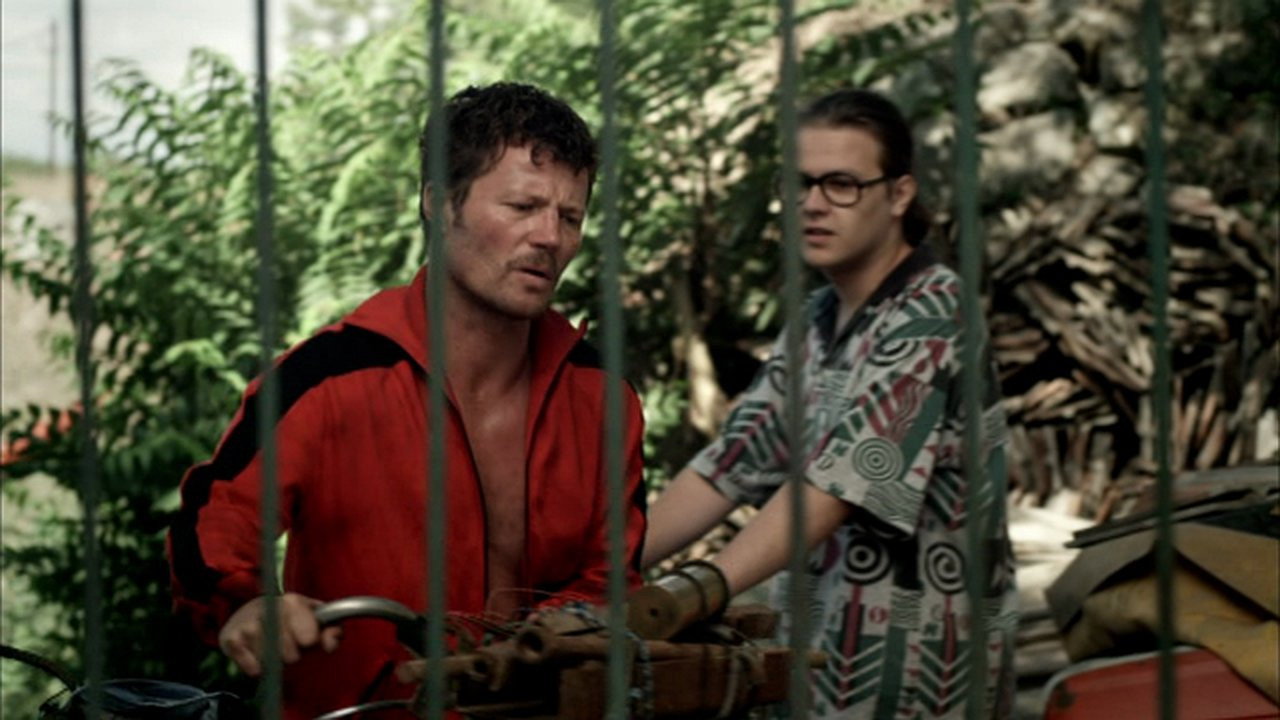



1990. The regime change reached the small village of Borsod. The people are unemployed and get drunk in the pub day after day. Csornai, the former potentate, wants to be mayor, so he lobbies. Polyak, a sullen, philandering lathe operator in his mid-forties, lives with his mother. He has stolen his father's lathe, which he himself has worked on for decades since his beloved father's death, from the factory that was shut down. An American tourist arrives in the village with a metal detector and begins investigating the border. It turns out that his father's plane crashed nearby at the end of the war, and he wants to find it. The pub is immediately in an uproar and the investigation begins. They find the grave of the Americans, but not everyone is there. Csornai wants to make a big deal of it, so he starts investigating. But the story takes an interesting turn, and suddenly the American's cherished...
It is a truth universally acknowledged that a single woman will be happiest if she marries a man with a good fortune, similar upbringing, matching attractiveness levels, and compatible politics.
For anyone who is not a cis white woman, a justice-fueled murderous rampage is not framed as liberation. Instead, they contribute to harsh stereotypes that vilify minority women with dangerous consequences.
White audiences saw Peola’s mixed-race passing as a Black woman’s struggle to be white. Black audiences saw it as the rebellion of a Black woman trying to gain privileges only given to white people.
Like all modern societal phenomenons, it started with a meme. This one highlighted that when there’s a mom in a Pixar film, she is almost without fail given striking curves that highlight the bottom half of her body following a minuscule waist. From Elastigirl to the skeletal Mama Imelda, the animation giant’s artists seem to have a fixation on making exaggeratedly curvy maternal characters.
In Tall Girl, Jodi learns to stand tall and find confidence within.
Some people’s first introduction to Mira Nair might be as New York mayor Zohran Mamdani’s mom. But with her insightful direction of 1991’s Mississippi Masala, Nair shows how much she deserves to be known as an artist. Delivering a nuanced portrait of a romance between a Black man and an Indian woman living in the South, Nair explores the complications each character faces, giving both equal weight.