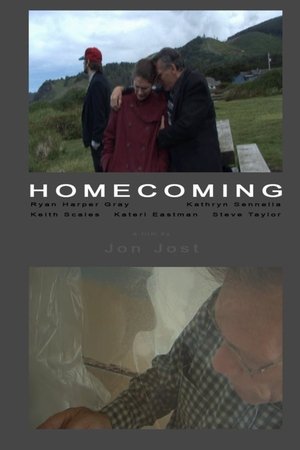
Homecoming
Newport, Oregon. In a coastal town, Jeff and his wife Mattie work together facing the economic shifts. One son Chris, is unemployed; the other, Steve, is away on military service. Chris is lackadaisical and shiftless, Mattie perhaps drinks on the sly and tried to help her son, Jeff keeps his nose to the grind-wheel. Chris is dumped by his girlfriend, Jamie. Jeff scrambles to stay afloat. During a therapy session it is revealed that Chris is Jeff's step-son. Steve returns, but in a "transfer tube". Following his funeral, the family meet; an argument erupts, revealing the depths of the division between Jeff and Chris. In a counseling session Chris breaks down and is comforted by the counselor. Mattie and Jeff, lost in their grief, each lose their way.

- / 5
PopScore
Representation
Pictures and Videos

Movie Information
Newport, Oregon. In a coastal town, Jeff and his wife Mattie work together facing the economic shifts. One son Chris, is unemployed; the other, Steve, is away on military service. Chris is lackadaisical and shiftless, Mattie perhaps drinks on the sly and tried to help her son, Jeff keeps his nose to the grind-wheel. Chris is dumped by his girlfriend, Jamie. Jeff scrambles to stay afloat. During a therapy session it is revealed that Chris is Jeff's step-son. Steve returns, but in a "transfer tube". Following his funeral, the family meet; an argument erupts, revealing the depths of the division between Jeff and Chris. In a counseling session Chris breaks down and is comforted by the counselor. Mattie and Jeff, lost in their grief, each lose their way.
Rating:
Genre:Drama
Written By:Jon Jost
In Theaters:
Box Office:
Runtime:104 minutes
Studio:Simha Productions


Articles You May Like
Peter Pan & Wendy: A Live-Action Fantasy
"Peter Pan & Wendy" is a diverse fantasy brought to life and an adventure for all ages.
Hong Sang-soo's Hat Trick
In The Novelist's Film, Hong explores the meaningful things people share and inspire by virtue of simply engaging with one another.
Dissecting the Casual Racism of “Airplane!”
Airplane! (1980) is a fun spoof comedy with lots of laughs, right? I watched this film for the first time the other night. I loved it. Then came the racist jokes.
A Colorful Revision of "Clifford the Big Red Dog"
"Clifford the Big Red Dog" retells the adventures of Emily and her striking puppy to highlight the joy of being different and inspire another wave of young fans.
Joyfully Chaotic, 'Why Don't You Play in Hell?' is a Must-See
If you enjoy Japanese cinema, absurdly violent action films, gangster flicks, or joyfully strange cinema, 'Why Don’t You Play in Hell?' is a must-see.