Julia Hart's Fast Color follows a mysterious woman Ruth, with malfunctioning superpowers who's being chased by a scientist to perform experiments on. She runs home where we learn her mother stays with Ruth's daughter after the latter was endangered by Ruth's malfunctioning powers. They try to figure things out so Ruth can finally be home, while the cops and the scientist work together to hunt her down.
Superpowers. They’ve been the subject of fascination for so long now, no one can even remember a world before Superman or Spiderman. Be it kids running to bookstores for their favourite comic books, or young adults doing cosplay, the fascination with superheroes and superpowers is trans-generational. And of course it is so, because they’re based on the need to overcome some very obvious inconveniences of our daily lives as human beings. The ability to fly, to be strong enough to move things without tools, to have night vision, to move fast, to teleport from place to place, it’s all born of need, like any invention. Interestingly, the superpower in Fast Color doesn’t seem to serve any such intrinsic purpose. It’s more a fascinating parlor trick than anything else. And interestingly enough, there’s no explanation, like Peter Parker’s radioactive spider or Flash’s lightning strike. This is possibly because the powers here serve as a metaphor for something more human, some emotional need.
The film never really tries to go into the science of these powers, which for that matter, make for amazing visuals, and I think it’s interesting because it doesn’t even seem to offer up the metaphor for the viewers to latch on to. While this makes the experience more personable, because each viewer can project their own insecurities onto the apparent lack this power seemingly helps conquer, it leaves too much unsaid to truly articulate the experience. I was quite frankly just baffled by the tightness of the plot, and mesmerized by the visuals of when the power is used, to become that critical in the moment, but it wasn’t until the very end that I found my reason to never forget the film. It was Ruth’s reason for not being able to control the power which made the most sense to me when it was finally revealed.
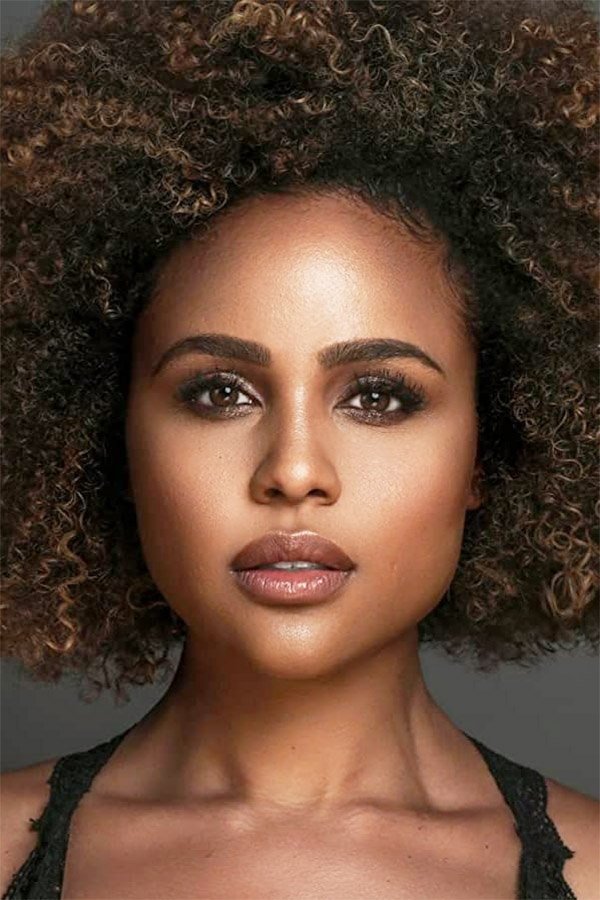
Actually, the fact that there’s something going on underneath her apparently adaptive rough exterior, is very clear thanks to Gugu Mbatha Raw’s amazing performance. However, what it is that happened to make her the way she is, is never explained and even in the climax, there’s just one line about her dysfunction. It’s never explained what about her was different that allowed for the difference in her power from her mother, and even her daughter. I think it’s a sense of not belonging which fueled her all the time because she was clearly different, but it’s possibly the other way around, and it’s like she was meant for a life of greater dimensions, which is why the different, more capable powers. This is possibly a metaphor for destiny. That feeling in your gut which tells you that there’s something out there you should look for and make your own is what the power represents, in my opinion.
For a film whose accessibility is almost entirely dependent on the ability to trigger emotional responses, it’s fast. The plot is very tightly designed to make the point the creator wants to, and then leave the audience with an aftertaste of rumination or irritation, depending on whether they connected or not. There is one slow segment where Ruth bonds with her mother over the latter’s stories about growing up and getting pregnant with Ruth. However, the story is basically a thriller and the thrill never stops. In fact, I think it’s because there’s this constant fear which fuels a survival instinct everyone can relate to, which makes this style of storytelling appropriate for the film, even if its hook is entirely emotional, and relies on being able to convey a lot through moments instead of words.