


Gus Van Sant's Constant Thematic and Cinematic Elements
The differences in these films could not be more blatant, and yet Gus Van Sant has found a way to portray the same messages and use the same techniques in each.

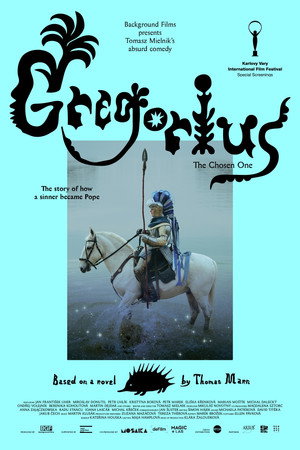


Gregorius, the Outcast. As an infant, he was abandoned by his own parents, conceived through the sinful love of a brother and sister. As a young man, misunderstood in a humble fishing village, he imagined the lake as an ocean, a small boat as a throne, and a spear as a royal sceptre. Yet deep within, he knew he was destined for something greater. Driven by a desire to become a knight and make the world a better place, Gregorius embarks on a journey that reveals the unfathomable ways of God. For within every sinner, there may also dwell a saint. Whether you are an outcast, a knight, a king, a hedgehog, or a pope, beneath the heavens there is ultimately only one true path: the path of a pure heart. Gregorius, the Chosen One. Inspired by Thomas Mann's novel, Tomasz Mielnik's poetic absurd comedy transports audiences to a long-lost age, when the star-filled sky served as a map of endless, radiant, and irresistible journeys.
The differences in these films could not be more blatant, and yet Gus Van Sant has found a way to portray the same messages and use the same techniques in each.
Kat Wahlen’s The Whiteboard tells, or rather shows, a delightful love story between two young women who meet in detention.
Documented human suffering is never easy to view or read about and is understandably triggering for many people, but it can be educational, and education is a key to change. An overwhelming amount queer people worldwide (and in my own country) have it far worse than I could imagine, and documentaries such as Welcome to Chechnya bring issues to light that certain groups of people would never see.
This spin-off series follows the adventures of Kitty Covey, Lara Jean's younger sister from the "To All the Boys" film franchise.
Director Dana Ziyasheva made her directorial debut, 'Defenders of Life' which focuses on the Ngäbe community, and the hardships Ngäbe girls faced in Costa Rica.
The cancelling of these series is being blamed on the writers' strike and low viewership, but it's just the latest example of the industry's lack of appreciation for stories about queer women.