





"A man has got to see his face." Horror Noire: A History of Black Horror
This documentary moves chronologically through Black representation in horror films, revealing the genre's connections to Black history.

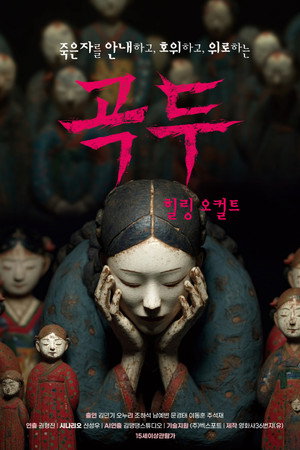
Jang Min-gi has spent his life hiding a secret: he can see the dead. When his estranged father — the last in a line of Kokdu, ritual guardians who escort souls to the afterlife — dies under mysterious circumstances, Min-gi inherits both a worn puppet kit and a burden he never wanted. Drawn into a thirty-year-old betrayal surrounding a burned funeral bier, he must confront an imprisoned soul demanding vengeance.
This documentary moves chronologically through Black representation in horror films, revealing the genre's connections to Black history.
It’s not often in America that you turn on the TV and see a show or a movie with a Muslim protagonist. And when they do, they're usually a negative stereotype. Ms. Marvel changes all of that.
Another uneven "Guess Who's Coming to Dinner" redux that says nothing novel about its subject matter.
Typically in film, characters suffering from mental illness are used as plot devices or exaggerated for comedy. 'The House that Jack Built's representation exceeds in accuracy and realism of OCD.
A decade since it aired, Shameless (U.S.) has always stuck to its guns (and baseball bats) about character diversity.
The initial reaction and review of Netflix's newly released romantic comedy featuring Haley Lu Richardson and Ben Hardy. Spoilers included!