The precarious representations in One Battle After Another
A bumpy journey about revolution and family makes us feel fear, disgust, humor, and satisfaction.

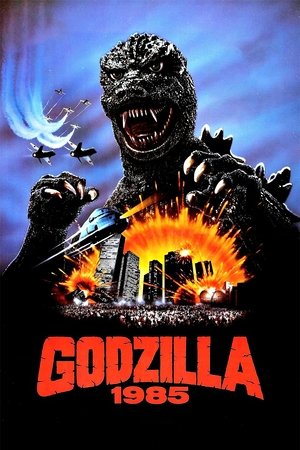


Originally released in Japan as "The Return of Godzilla" in 1984, this is the heavily re-edited, re-titled "Godzilla 1985". Adding in new footage of Raymond Burr, this 16th Godzilla film ignores all previous sequels and serves as a direct follow-up to the 1956 "Godzilla King of the Monsters", which also featured scenes with Burr edited into 1954's "Godzilla". This film restores the darker tone of the original, as we witness the nuclear destruction of giant lizard terrorizing Japan.

Koji Hashimoto, R.J. Kizer
Director


Raymond Burr
Steven Martin

Keiju Kobayashi
Prime Minister Mitamura

Ken Tanaka
Goro Maki

Yasuko Sawaguchi
Naoko Okumura

Shin Takuma
Hiroshi "Ken" Okumura

Warren J. Kemmerling
General Goodhue
James Scott Hess
Colonel Raschen
Travis Swords
Major McDonough

Eitarō Ozawa
Finance Minister Kanzaki

Taketoshi Naitō
Takegami, Chief Cabinet Secretary

Nobuo Kaneko
Home Affairs Minister Isomura
A bumpy journey about revolution and family makes us feel fear, disgust, humor, and satisfaction.
Liar, Liar, Vampire takes a bite out of clichés in romances between vampires and teenagers. Anything but boring and dripping with fun, it's a Halloween story with a twist.
The social issues The Half of it takes on are handled well, between the antagonization brought on to Ellie for her race and the conflict that arises from her being gay. Both aspects of her character are built up over the course of the film and don’t seem abrupt or rushed. The film shows racism towards Ellie and her and father in varying levels, from having her schoolmates specifically address her as "Chinese girl” to the fore mentioned way her Dad is treated due to language barriers. The same can be said about Ellie being a lesbian. While she never truly “comes out” in the narrative, that does not undermine her journey of self-discovery from being meaningful. These ideas aren’t thrust upon the viewer in a preachy manor, the scenarios that occur feel believable given the rural setting. The film presents watchers with problems whom those like Ellie may face, and leaves us to sit with them and reflect.
t’s relatable and heartbreaking all at once, and it’s impossible to watch Happy Together without reflecting on oneself. The film is stunning in every aspect, and is a vital piece of LGBTQ cinema.
Miley Cyrus makes a revival in this Disney+ documentary on her recent album Endless Summer Vacation.
One of the reasons I love watching movies is that, much like books, they serve as windows into other times and different places. Productions from around the world offer valuable insights into the history and culture of their respective countries. And just like literature, cinema can help us understand the present by showing us the past.