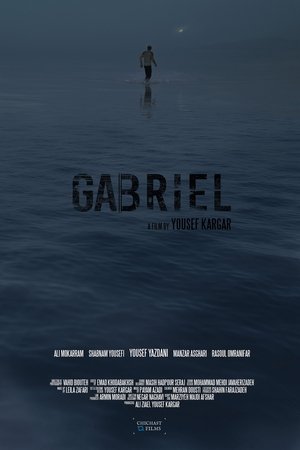
Gabriel
Gabriel is a middle-aged man who lives with his son. His wife has been lost for some time. All the people are suspicious about her. One day news comes to him and he has to choose one: expediency or conscience?

- / 5
PopScore
Representation
Pictures and Videos

Movie Information
Gabriel is a middle-aged man who lives with his son. His wife has been lost for some time. All the people are suspicious about her. One day news comes to him and he has to choose one: expediency or conscience?
Cast

Articles You May Like
ALTER Horror Short Film - "La Noria"
"La Noria" deftly subverts audience expectations as it explores childhood grief, anxieties, and pain. The award-winning short shows us that often our monsters are often sprung from our darkest places.
The Critters Are Going 'Back to the Outback'
Tired of being cooped up in their cages, the critters escape the Australian zoo and try to find their way to the outback.
Star Wars Episode VIII: The Last Jedi. The Best Post-Disney Star Wars Film
I love The Last Jedi. I don’t think there has been a Star Wars movie in quite some time that brought something new, something fresh to the table.
Nope! 1Up, Don't Make Me Go, Mr Malcolm's List | Incluvie Movie Highlights Podcast
The July episode of Incluvie Movie Highlights provides 4 exciting films that have polarizing reviews! Special guest and Incluvie movie critic Daleyna joins in to discuss Mr Malcolm's List, a regency-era film set in England, starring leads of Indian and African heritage (Freida Pinto and Sope Dirisu), which is a first! Don't Make Me Go, starring an Asian and Blasian lead (John Cho and Mia Isaac), is a sincere film with a controversial ending! Don't worry, no spoilers. 1Up, about a team of female gamers led by Paris Berelc, who's half Asian, receives acclaim on Incluvie, but much hate everywhere else on the internet. And the feature film... is Nope ! One cohost thinks the film was imaginative, while the other cohost insists it was boring (but with good social commentary)! Who thought what? Tune in with your hosts: Cathy Yee and Hazel Bolivar!
Underwhelming Presence
The movie opens with an empty house, cameras pan around from the perspective of what viewers are confused about at first, but turns out to be a spirit living in the home.