Representation Matters: Diverse Characters and Voices in “The Amazing World of Gumball” and “The Epic Tales of Captain Underpants”
Inspiring and diverse animated series for the whole family.

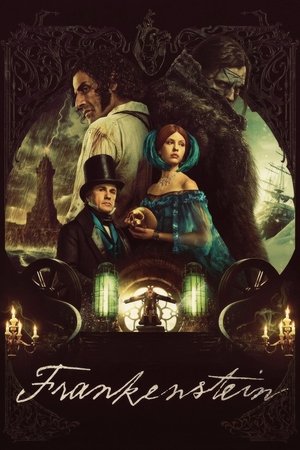


This highly anticipated film by Guillermo del Toro is adapted from the well-known and beloved 19th-century tale by Mary Shelley, which is often considered the first sci-fi novel.
In the 19th century, the exchange across continents had already become common in the areas of merchandise, science, and culture. In the film, the journey of Victor Frankenstein defying death gained inspiration from the Eastern energy system that is named ‘Qi’ and the lymphatic system being studied by Muslim scholars. The historical fantasies set in Europe need to choose to what extent of detail they will depict different cultures. Latino actor Oscar Isaac played Victor Frankenstein, a member of the aristocracy in Europe. Outside of mentioning Vienna and Edinburgh, this film doesn’t discuss the potential different influence from various academias and sociopolitical conditions as explicitly as the origin story. However, the continuation and waning of the Crimean War provided the necessary resource, the corpses, for Frankenstein’s research and also urged him forward in terms of the impending end of funding from ammunition dealing, which was later on revealed not to be the truth.
The more intriguing aspect is in Victor’s upbringing. Victor blamed his mother’s unexpected demise on his father’s hatred towards her and incompetence as a renowned physician. Victor was suspicious of his father’s despite for him and his mother, detesting their dark hair and quiet nature, favoring his joyous and blonde younger brother. Victor shares a strong bond and love with her mother, speaking in their own language. Even though elusively, the love and hate about lineage and bloodline are in the soil that fostered Victor’s desire to conquer death.
Rather than an epic historical design, the vivid colors in the film tend to be akin to a romantic fantasy, often associated with children’s films. The mechanic design with layers of metal components has an appearance of cyberpunk. The green cylinders filled with fluid and outlined with the rosy gold color caught my attention alone by themself. The scarlet and emerald flood the screen throughout the film, signifying different sides of ideas. At the beginning stage of experiments, flesh slicing and blood spilling repeatedly were shown on screen with a smooth waltz to serve a gothic taste. Accompanying this aesthetic of romantic fantasy, Guillermo del Toro favoring well-built props over special CGI offers a unique experience in vision.
I disagree with a popular belief that the women are attracted to the monsters in Guillermo’s Frankenstein and the Shape of Water because of a resonance with something dark and alien in the monstrosity. Even though the monster is set to be grotesque, played by Jacob Elordi, the monster is 6 feet 5 inches tall, filled with stitch scars but built in perfect fitness, and with a sharp jawline. Mia Goth’s Elizabeth connects with the creature by the childlike purity and innocence, untouched by men’s greed and brutal ideas. The attraction in these two films has a sense of fairytale, yearning for a pure goodness and beauty buried under the alienated surface. The goodness of the creature is fully expressed in the second half of the movie, told from the creature’s perspective. The good deed of him let him describe ‘the spirit of forest’—still as a being with otherness but as a holy intervention. Films like Possession (1981) are more likely to meet the description of depicting the woman’s resonance with the monstrosity.

Dr. Victor Frankenstein, a brilliant but egotistical scientist, brings a creature to life in a monstrous experiment that ultimately leads to the undoing of both the creator and his tragic creation.

Guillermo del Toro
Director


Oscar Isaac
Victor Frankenstein

Jacob Elordi
The Creature

Christoph Waltz
Harlander

Mia Goth
Elizabeth / Claire Frankenstein

Felix Kammerer
William Frankenstein

Charles Dance
Leopold Frankenstein
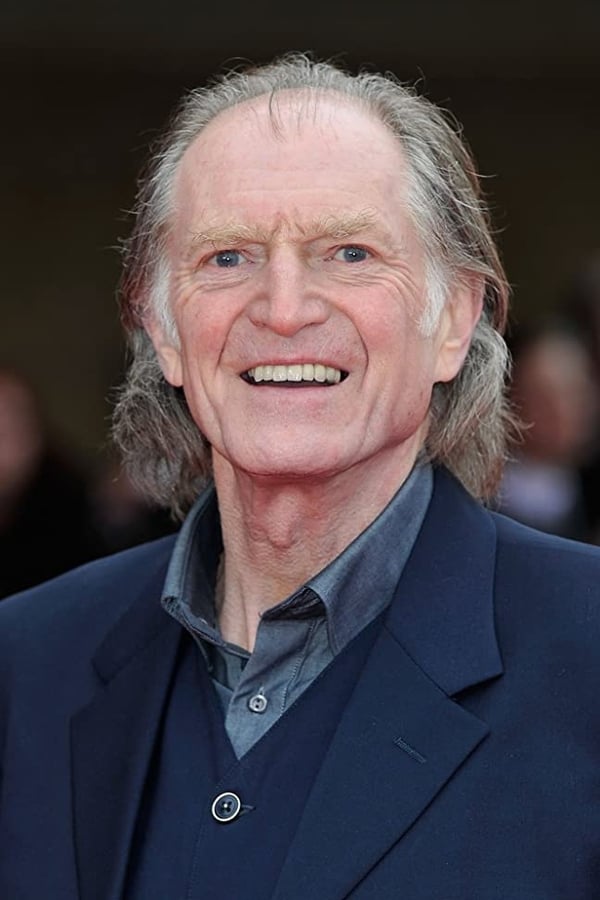
David Bradley
Blind Man

Lars Mikkelsen
Captain Anderson

Christian Convery
Young Victor Frankenstein

Nikolaj Lie Kaas
Chief Officer Larsen

Kyle Gatehouse
Young Hunter
Inspiring and diverse animated series for the whole family.
This film manages to be simultaneously topical and timeless. Without being preachy, it highlights society’s flawed relationship with tech; insights into the complex ideas of family struggle are expertly dispersed among a perfectly paced and balanced story.
An analysis on how the Garfield movie fails to represent the characters it is adapting, especially the women, by removing their best characteristics.
Sing 2 the beat in this jukebox sequel featuring anthropomorphic animals with musical talent.
Rip Tide is a coming-of-age film that teaches viewers about finding yourself and reconnecting with surroundings.
Writing great villains is about striking a balance between charming and evil, so we love them but also love to see them lose.