











Chickenhare and the Hamster of Darkness
Chickenhare and the Hamster of Darkness explores true identity through exploration.

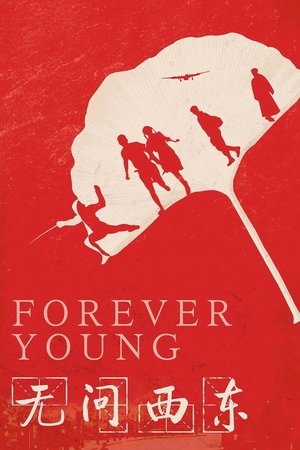


From World War, to revolution and ultimately rebirth, Forever Young is the story of four generations spanning a hundred years of modern Chinese history. Each generation faces its own unique set of challenges. Up against corporate corruption, the trials and tribulations of the cultural revolution, and one's duty to nation in time of war, they are faced with choosing their individual paths through history. But as the challenges and turmoil of each generation may differ as time changes, what was learned in the past cannot help but effect the choices that are made in the future as it is passed down from generation to generation. And that is the universal message that being true to yourself is precious. It is the source of strength that empowers one to become the person they want to be, to march forward as far as their hearts desire, into the future.
Chickenhare and the Hamster of Darkness explores true identity through exploration.
The film is a documentary focusing on heavy metal in the late 80s and tackles topics like drug addiction, alcoholism, sex, masculinity, and of course, rock and roll. However, this didn’t feel like any documentary I’ve ever seen before.
Never Have I Ever season 3 is charming and hilarious as it has been in past seasons and still sports a diverse ensemble cast. However, the show doesn’t always treat its marginalized characters that well.
Make no mistake about it, Gilligan has created a continuation that earns its place in the annals of Breaking Bad lore. El Camino isn't a forced entry in an otherwise brilliant world of fiction. This is a satisfying take, which manages to give closure to an iconic character of fiction.
Him is visually stunning—all concrete cathedrals and bone-rattling impact shots that look like a nightmare highlight reel. Marlon Wayans is magnetic as this legendary quarterback who's basically selling salvation with a smile that never quite reaches his eyes. But the story keeps running in circles: more tests, more cryptic pep talks, more ritualistic drills. The sports-as-religion metaphor beats you over the head when subtlety would've been more effective. The middle drags, and that finale chooses spectacle over substance. It's undeniably stylish, but left me cold. Also worth noting: despite the Monkeypaw connection, this isn't actually a Jordan Peele film—he didn't write or direct.
“Reboot” can be crass and has much room to improve, but with investments of time and care, could flower out of the seed of a vision.