
“Not My Dog,” But It Should Be
Not only can viewing Not My Dog inspire people to adopt a dog that may be facing tremendous odds, but even that simple action of watching has a social effect.
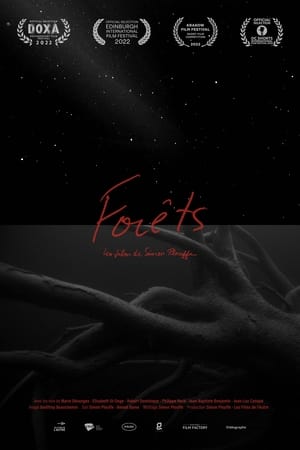


In a dark, ambiguous environment, minuscule particles drift slowly before the lens. The image focuses to reveal spruce trees and tall pines, while Innu voices tell us the story of this territory, this flooded forest. Muffled percussive sounds gradually become louder, suggesting the presence of a hydroelectric dam. The submerged trees gradually transform into firebrands as whispers bring back the stories of this forest.
Not only can viewing Not My Dog inspire people to adopt a dog that may be facing tremendous odds, but even that simple action of watching has a social effect.
Strangers in a crowd, exchanging glances, looking away, continually managing to run into each other then part ways, end up at the same diner, find they've rented the exact same vehicles, and are then made to travel together to learn once more whether they can both find genuine adoration and companionship again. This really does, in so many words, sum up the foundational gist of of this new feature film from writer Seth Reiss ("The Menu") and director Kogonada ("The Acolyte", "After Yang"). Yet, it's all only the set-up for the REAL wonder of everything that happens before, during, and in the aftermath of a magical, meaningful journey.
A 3D animated film centered on chasing fame in the humble stomping grounds of middle school. Unfortunately, while the protagonist dreams big, the plot falls short and fails to capture even a semblance of diversity.
"Driveways" is a nuanced portrait of an Asian American family, touching on themes of loss, growth, and belonging.
Korean pop culture has mastered emotions as both a scientific field and an artistic revolution. Think of how K-Pop and K-Dramas have taken over the world. How? Simply put — they are addictive. How are they addictive?