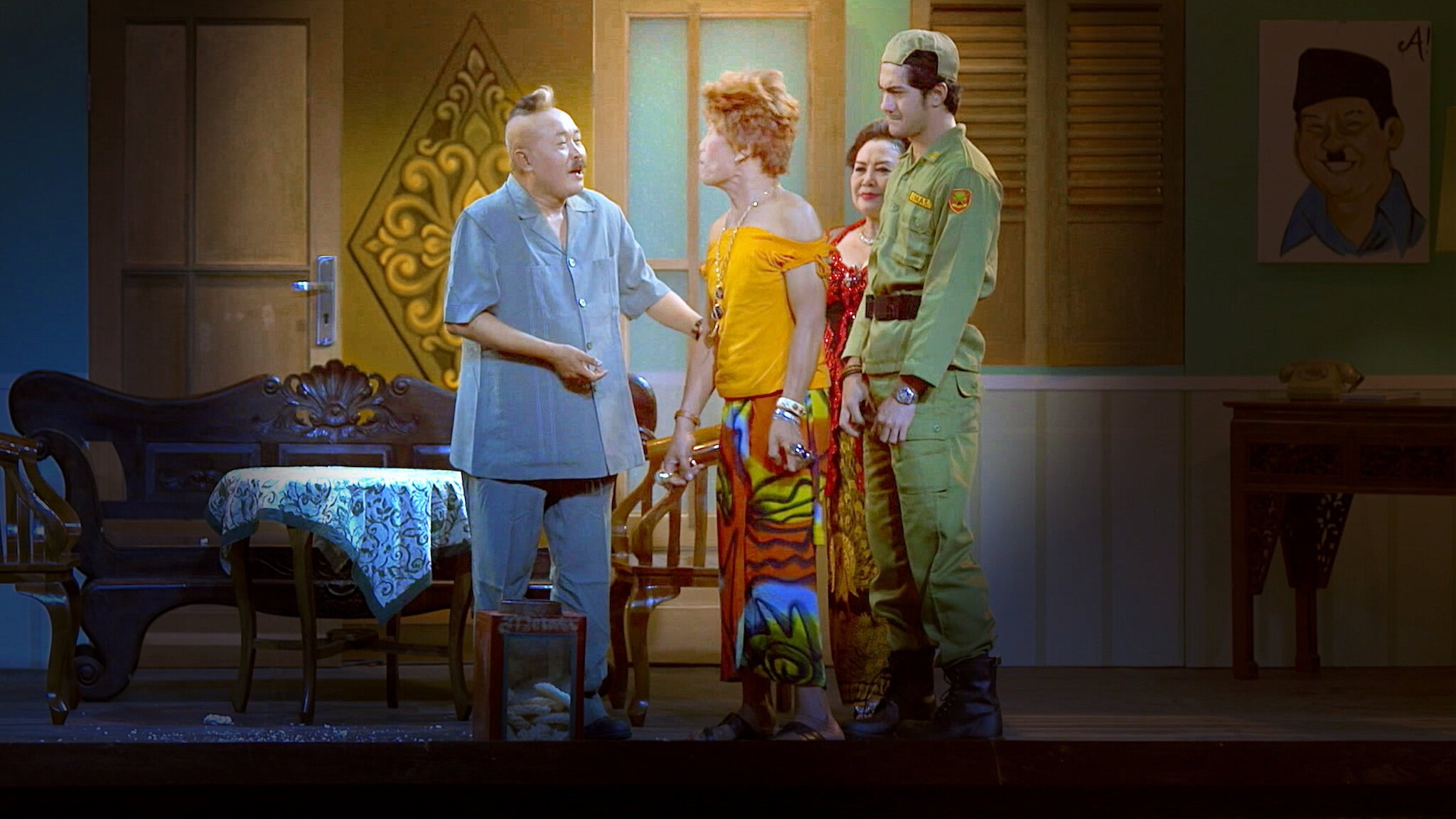
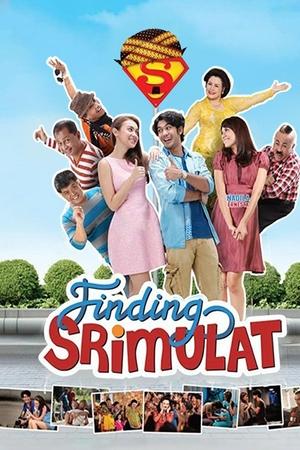







Beset by financial woes, an event planner with a baby on the way tries to reunite an iconic comedy troupe for a performance that could save the day.
What are we willing to walk through to see our dreams come to pass? Our minds might be so wholly alive with the passions we carry and the plans we make to see these things become all we wish them to be, yet life doesn’t always want to come alongside. Instead, obstacles arise, both physical and mental, which attempt to dissuade us or even prevent us from moving forward, stalling or stagnating the momentum to achieve what we desire. The age-old question remains….can we overcome? Or will we BE overcome?
The multifaceted musical represents America in the 1960s and the battle against bigotry as an ensemble cast portrays how to fight for the limelight.
It was always people for Joe, and he ultimately found them at the end of a long, painful, yet illuminating quest for self-discovery outside of one, confident constant - his bisexuality.
White audiences saw Peola’s mixed-race passing as a Black woman’s struggle to be white. Black audiences saw it as the rebellion of a Black woman trying to gain privileges only given to white people.
With The Father, writer-director Florian Zeller- who wrote and developed the play upon which the film is based- pulls no punches as he confidently makes every effort to put the audience in the mind of someone whose grip on reality has all but vanished. It’s a dazzling testament to Zeller’s abilities as a director as he makes his first transition from stage to film appear as if he’s been working behind a camera his entire career. The dialogue he fashions with co-writer Christopher Hampton, along with the work of production designers Peter Francis and Cathy Featherstone, collectively makes the downward spiral of dementia startlingly tangible, doing so in a way that can be comprehended by everyone except the person it directly affects.