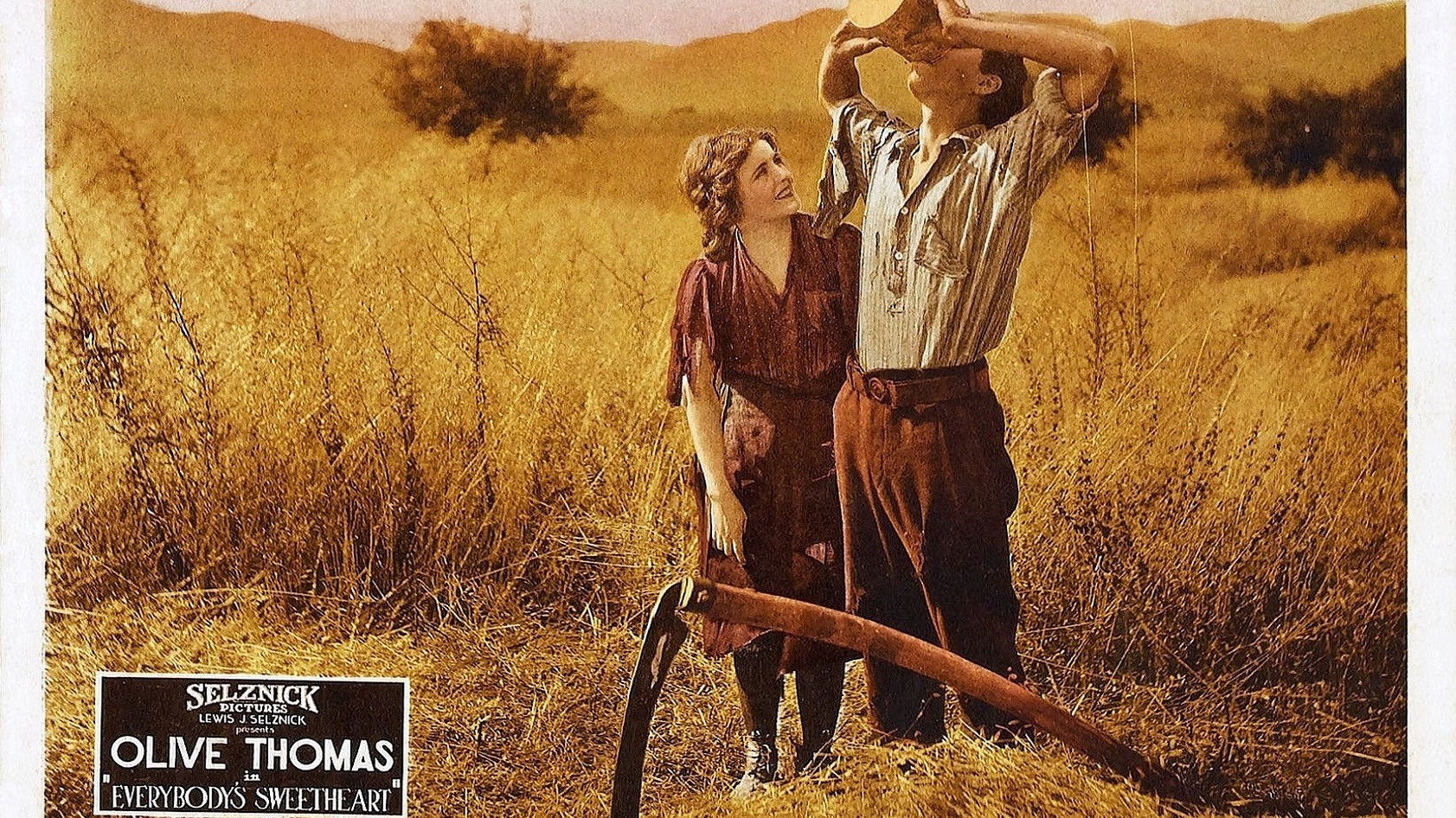
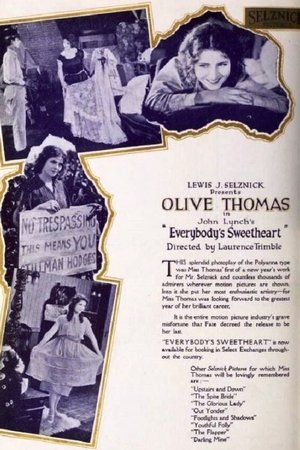
Everybody's Sweetheart (1920)
When the benign headmistress of the county poor farm is discharged and replaced with a tyrant, John and Mary, two orphans who have lived there since infancy, decide to run away. Accompanied by a feeble old corporal from the farm, they are forced to seek refuge at the home of General Phillip Bingham when the old soldier becomes ill. After the corporal's death, the general promises to care for the two waifs. Mary becomes his protegee, and John his gardener. Friction develops between the two newcomers and Willing and his wife Jessica, a couple living with the general who hope to inherit his wealth, until one day the general notices a close resemblance between a portrait of his deceased son and John. It is discovered then that John is actually the general's grandson. Thus legitimized, John weds Mary, and the general is pleased with his newly acquired family.

- / 5
PopScore
Representation
Pictures and Videos

Movie Information
When the benign headmistress of the county poor farm is discharged and replaced with a tyrant, John and Mary, two orphans who have lived there since infancy, decide to run away. Accompanied by a feeble old corporal from the farm, they are forced to seek refuge at the home of General Phillip Bingham when the old soldier becomes ill. After the corporal's death, the general promises to care for the two waifs. Mary becomes his protegee, and John his gardener. Friction develops between the two newcomers and Willing and his wife Jessica, a couple living with the general who hope to inherit his wealth, until one day the general notices a close resemblance between a portrait of his deceased son and John. It is discovered then that John is actually the general's grandson. Thus legitimized, John weds Mary, and the general is pleased with his newly acquired family.
Rating:
Genre:Drama
Written By:John Lynch
In Theaters:10/4/1920
Box Office:
Runtime:60 minutes
Studio:Selznick Pictures





Articles You May Like
Ivy and Bean form a new Friendship
Two young girls meet in the same neighborhood unexpectedly as they embark on a new adventure using their imaginations as this movie brings strong representation among women.
'The Djinn' Movie Review
The Djinn is about childhood traumas and lifestyle changes. It tells the story of Dylan (Ezra Dewey), a mute boy who blames himself for his mom’s death. He also condemns himself for being speech-impaired, and he thinks that if he did not have that condition, everything could had been different.
I Can’t Believe I Just Now Heard of 'Tangerine'; We Need More Narratives Representing Black Transgender Women
Films staring black transgender actresses/actors are few and far between, it’s refreshing to see a demographic represented in film that hardly gets any attention. This is especially important as the Black trans community has been shown in studies to face the highest level of discrimination amongst general trans and non-binary groups. That is why it’s so crucial that we amplify their voices through any way we can, storytelling being a great medium to do so.
A Man Who Indeed is 'Rescued By Ruby'
Another story focuses on the bond between a young man and a shelter dog in this Netflix drama film.
"Obsession" and Mental Illness
It's not love. It's Obsession. The hook of this movie is the tension between wanting to be loved and the fear of being all-encompassed by that love. It plays on men’s typical (though certainly not universal) inner-conflict