
Five Nights at Freddy's 2—Confusing even for long-time fans
The second entry of the Five Nights at Freddy’s series released recently, garnering very divisive reviews amongst both fans and critics.
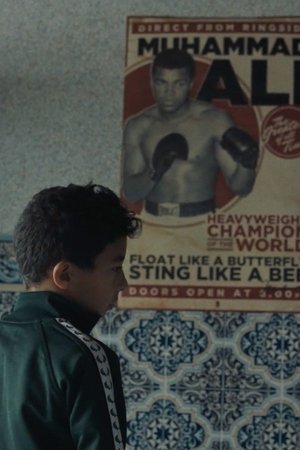


From the music of Canadian composer Howard Shore, Belgian filmmakers Anthony Nti and Chingiz Karibekov craft a story of a boy picked up from school by (presumably) his brother, who sees he’s sitting out from gym class after picking a fight. The elder brother leads his sibling to a house—empty apart from a poster of Muhammad Ali. They set up a small area to exercise and the young boy is pushed to his limits, as he is perpetually asked to hit boxing gloves harder and harder. This short film is part of the 2x25 Project of Film Fest Gent and the World Soundtrack Awards. The project commissioned 25 composers to compose a short piece of music, after which 25 filmmakers made short films that are the ultimate symbioses of music and cinematography, fitting completely within the DNA of the festival. The result: 25 exceptional films where the music inspired the form, narrative and texture.
The second entry of the Five Nights at Freddy’s series released recently, garnering very divisive reviews amongst both fans and critics.
An analysis on how the Garfield movie fails to represent the characters it is adapting, especially the women, by removing their best characteristics.
We, the Jane Austen aficionados, are suckers for everything and anything under the sun that’s remotely related to her and her world. That’s because we are so drawn to her unique style of fiction, romance, and social commentary, we take any allusion to her influence as a hint to what to expect when we start watching a movie or reading a book.
I highly recommend Dark Waters. It’s a highly engrossing picture, which lends itself to cautionary storytelling. The dark information continually grows, inspiring change and accountability altogether. Overall, Haynes’ picture will not be known for its inclusiveness--but it will be known for being a fantastic, engrossing film.
The “gay best friend”, an age-old trope, has been done in countless films and television series. Ranging from one-note (Sex and the City's Stanford and Mario) to nuanced (Unbreakable Kimmy Schmidt's Tituss), the gay best friend exists to support and advise the main protagonist, with their conflicts swept to the side.