

'Zom 100' Critiques Predatory Capitalism
Zombie apocalypses have been metaphors for late-stage predatory capitalism, but never a system disrupter that brings about freedom.
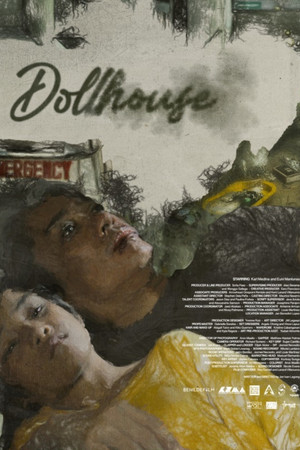


A year before the present, we are introduced to the world of Karding—a father living on the edge of the city, between destruction and hope. Inside a neglected hospital and the haunted home he calls his den, he cherishes the memory of his daughter Karylle while struggling to get through the day through petty crimes and vices. The child’s birthday approaches, and a simple wish—a dollhouse—becomes Karding’s last holdout. As the boundaries between memory and reality gradually blur, his search leads to a public outcry that exposes the pain of loss and the failure of a system that has long since abandoned him.
Zombie apocalypses have been metaphors for late-stage predatory capitalism, but never a system disrupter that brings about freedom.
In this short film, writer/director Nikita Hattangady focuses on Jai, a starving artist rooted in the latter category. Though unhoused, he works hard.
A film for the post-MeToo era that inverts the narrative with an ironic coda, Tár depicts the duality of a sensitive artist capable of great evil and vile manipulation.
It took writers D.B Weiss and David Benioff two years to give us a promising final season. Two. Years. It was just going to be six episodes, which was short considering that all the other seasons — except season 7 — were 10 episodes. 10. 6 wasn’t enough, and even HBO wanted to give the writers more episodes. More seasons, even. However, the writers wanted to get out of the show as quickly as possible to work on other projects. This abruptness is clearly shown in this season.
The trainwreck is hot but tame.
'Riders of Justice' perfectly depicts some masculinity problems present in our society. Moreover, it talks about how hard is to lose someone and how different people deal with the situation.