Facing the world with our fair share of uncertainties and/or apprehensions, many of which, sadly, may be well-founded, is nothing to sneeze at. Influenced and buffeted by the constant barrage of social media, fake news, and general upheaval present in our contemporary reality, what IS real and what's not becomes a blur. Hence, what if your entire life to date has been to exist in a constant state of concern, even paranoia, for your health and overall well-being?
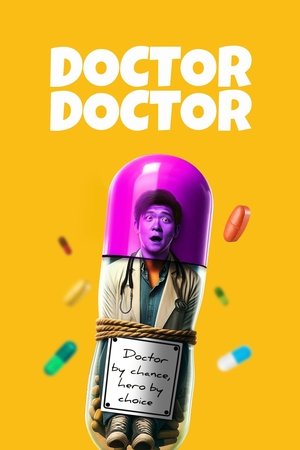
The concept is the foundational gist, adeptly written and executed in wonderfully comedic format, manifesting through this 98-minute indie feature film from writer/director/producer Steven Lee Mraovitch, writer/producer Jonathan Turco, producer Jared Turco, and executive producer Ben Loggins. Here, the narrative sees a young germaphobic, hypochondria-driven man, Oliver (Steven He), finding himself having to pose as a doctor when the local physician's office is taken over by bank robbers.
Yes, it sounds utterly absurd, and that's precisely what it is, to the most engagingly hilarious extents!! Watching the evolution of chaos that ensues out of one person's simple desire to have freedom from bullying and other scrutiny due to his conspicuous (and extreme) obsessions with all things illness related alone is hysterical to absorb. Add in the perspectives of other patients and the robbers themselves to get snared in Oliver's forced deception and actions....SO hilarious!
Our social media-driven culture and over-reliance on it, how we handle intense and unanticipated circumstances, sibling relationships, the questionable nature of the grander medical machine, how we rationalize our decisions made under duress, stabs at police brutality, other medical conditions, and dubious practices by those who are driven by greed rather than to genuinely help others are but some of the thematic explorations we witness amidst the consistently delivered laughs and pure entertainment the film just oozes and overflows with.
What I also appreciated was the fact that, in spite of the absolute insanity and witty atmosphere the film conveys, there is still an overall respect paid to those who really do face this type of condition Oliver battles with, and there's a superb moment at the end of the film's third act that backs this up with very affecting impact. This critic feels that is the mark of excellent filmmaking when serious conditions can be presented in such whimsical and fully uproarious manner while not remotely insulting or invalidating the actual condition itself.