'Joker' (2019)
Joker is a compelling, character-driven, psychological tale that has a message behind the madness.
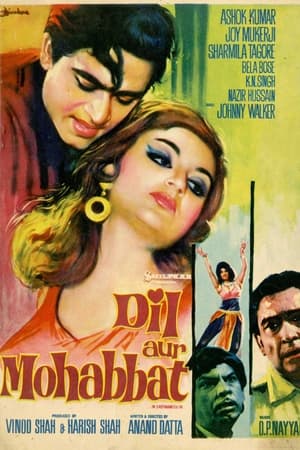


Widowed by the sudden passing of his wife, Superintendent of Police, Choudhry, brings up his son, Rajesh, on his own, teaches him all known good values, and when he grows up sends him to College in Bombay, and remits money to him regularly. Choudhry would like to transfer to Bombay Police, so that he can be close to his son, and then one day out of the blue, his transfer is approved, and a delighted Choudhry writes to his son to pick him from the railway station. Upon arrival in Bombay, he does not find his son at the Railway Station, but when browsing through a newspaper he sees his son's photograph - wanted for the murder of a card-sharp. Shocked and dismayed, Choudhry attempts to piece his life together and attempts to find Rajesh before the City Police do - for he may well face the death sentence. Choudhry does find him, but only after Rajesh is accused of killing a woman named Kishori, and this time Choudhry is quite sure that there is no hope for Rajesh.

Anand Dutta
Director

Ashok Kumar
Supt. of Police Choudhry

Joy Mukherjee
Rajesh Choudhry (as Joy Mukerji)

Sharmila Tagore
Anuradha Varma

Bela Bose
Kishori

Nazir Hussain
Police Commissioner G.P. Varma
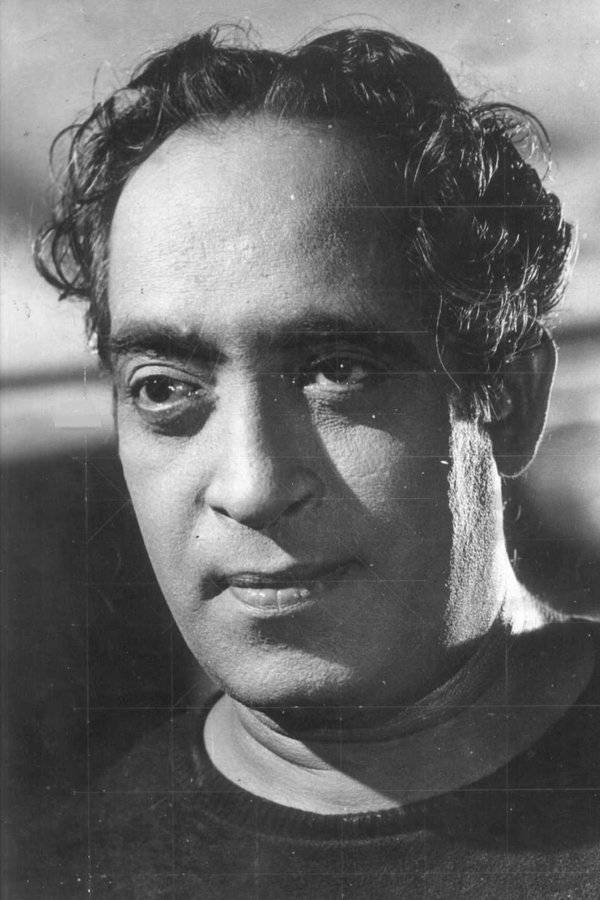
K.N. Singh
Singh
Asha Nadkarni
Mrs. Choudhry

Anoop Kumar
Anoop

Purnima
Parvati

Gajanan Jagirdar
Hostel Warden (as Jagirdar)
Randhir
Ramu
Joker is a compelling, character-driven, psychological tale that has a message behind the madness.
Curb Your Enthusiasm, the improvised Seinfeld, is simply one of the funniest, most brilliant shows on television right now. Following Seinfeld co-creator Larry David and all of his mischievous antics, the series celebrated its 100th episode on Sunday with its Season 10 finale.
Zombie apocalypses have been metaphors for late-stage predatory capitalism, but never a system disrupter that brings about freedom.
Hokum is an enjoyable horror film that will probably get a little under your skin, but it isn’t the tour de force that you might be expecting.
"Ladies First" has a fundamental misunderstanding of what's feminine because of the patriarchy and what women do because they genuinely enjoy it.
'Pariah' tells a powerful, mesmerizing, and unflinchingly honest story of identity.