







Spider-Man: Into The Spider-Verse Tells Us to be Our Own Heroes.
Miles Morales learns to be his own hero as he takes on the well loved mantle of Spider-Man in a multiverse of Spider-People.
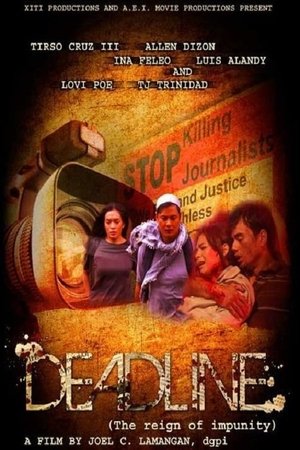


Ross Rivera is a writer whose cynicism has converted him into a government apologist, is suddenly forced to reassess his role as journalist when he finds himself right in the middle of unearthing a conspiracy linking Muntazir Ghazi, a local warlord, with election fraud and the sporadic killing of journalists in various parts of the country. While Ross wrestles with the his conscience and attempts to convince Greta Manarang, television newscaster and grieving girlfriend of a recently murdered journalist, of his newfound integrity in Manila, Azad and Claire, local journalists who are keep into the tracks of Ghazi, are hunted down by Ghazi's henchmen. Their stories eventually intertwine, revealing a more frustrated than concerned outlook of the state of free speech in a country that supposedly fosters democracy.
Miles Morales learns to be his own hero as he takes on the well loved mantle of Spider-Man in a multiverse of Spider-People.
The plot could’ve really been interesting if the elements of lycanthropy was integrated with perhaps the struggle of identity of being LGBTQ+. It's an experience for so many that as they’re starting to realizing their true selves, they feel like a monster, especially if they come from unsupportive homes or communities. Instead, the horror and transformation elements seem thrown in without contemplation of how this could deepen the narrative.
If you mix religious rituals with dark mythology, the result will be effective, and the story powerful in 90% of the cases. That is exactly what happens at the beginning of The Vigil.
When long-time couple Jenny and Nate break up so Jenny can pursue her journalism career, Jenny leans on her two best friends for one last epic night in the city.
The social issues The Half of it takes on are handled well, between the antagonization brought on to Ellie for her race and the conflict that arises from her being gay. Both aspects of her character are built up over the course of the film and don’t seem abrupt or rushed. The film shows racism towards Ellie and her and father in varying levels, from having her schoolmates specifically address her as "Chinese girl” to the fore mentioned way her Dad is treated due to language barriers. The same can be said about Ellie being a lesbian. While she never truly “comes out” in the narrative, that does not undermine her journey of self-discovery from being meaningful. These ideas aren’t thrust upon the viewer in a preachy manor, the scenarios that occur feel believable given the rural setting. The film presents watchers with problems whom those like Ellie may face, and leaves us to sit with them and reflect.
This is a Spanish-speaking short film that contains English subtitles. The short film is produced in the United States.