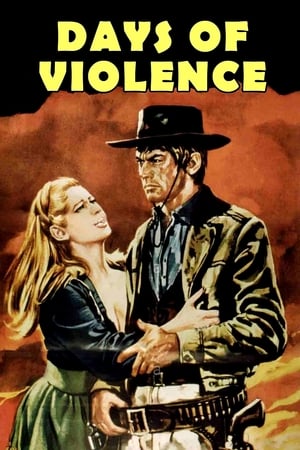
Days of Violence
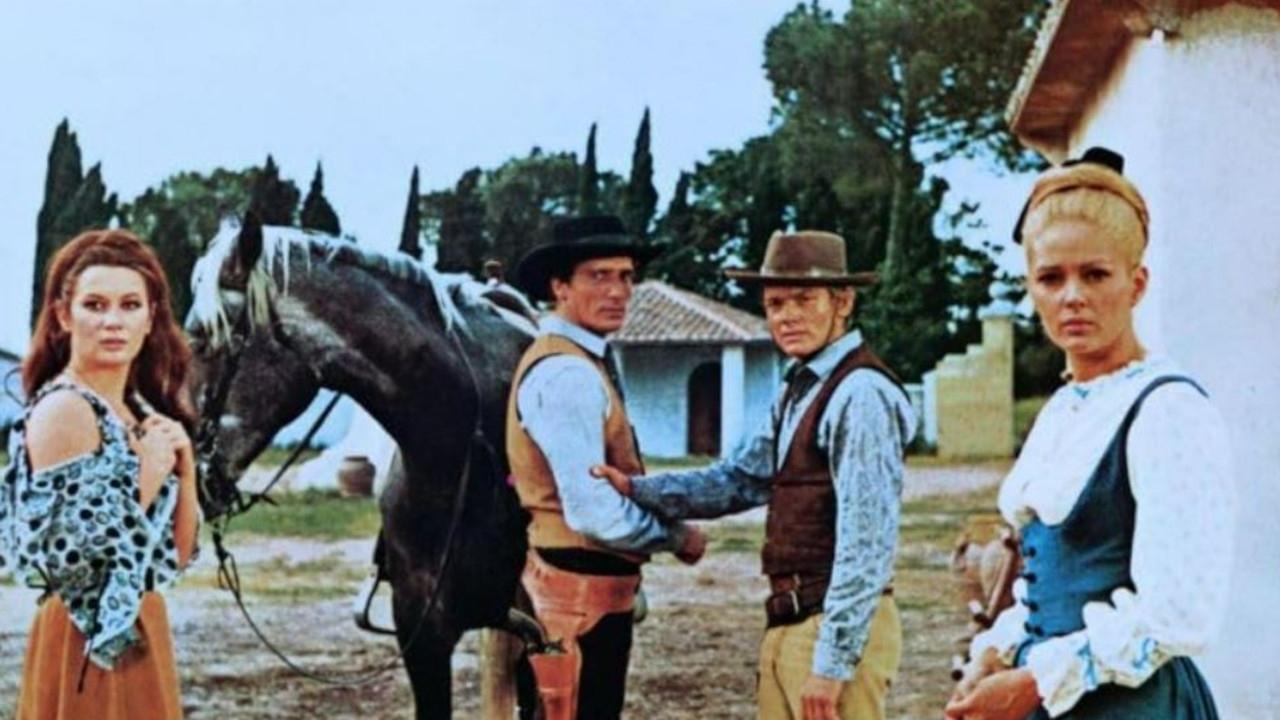
During the last months of the Civil War, Joe's brother is killed unjustly by Clifford, a captain in the Northen army. Joe decides to join a group of Southerners determined to resist till the end. Joe is considered an outlaw and a reward is posted for his capture. When the war ends, Joe returns to the farm where he used to work only to find Christine, the owner's daughter and his sweetheart, engaged to the hated Captain Clifford.

- / 5
PopScore
Representation
Pictures and Videos

Movie Information
During the last months of the Civil War, Joe's brother is killed unjustly by Clifford, a captain in the Northen army. Joe decides to join a group of Southerners determined to resist till the end. Joe is considered an outlaw and a reward is posted for his capture. When the war ends, Joe returns to the farm where he used to work only to find Christine, the owner's daughter and his sweetheart, engaged to the hated Captain Clifford.
Rating:
Genre:Western
Written By:Mario Amendola, Antonio Boccaci, Paolo Lombardo, Gian Luigi Buzzi
In Theaters:
Box Office:
Runtime:103 minutes
Studio:Concord Film







Articles You May Like
Pixar’s Objectification Obsession in “Inner Workings” and Beyond
Like all modern societal phenomenons, it started with a meme. This one highlighted that when there’s a mom in a Pixar film, she is almost without fail given striking curves that highlight the bottom half of her body following a minuscule waist. From Elastigirl to the skeletal Mama Imelda, the animation giant’s artists seem to have a fixation on making exaggeratedly curvy maternal characters.
I “Hope” You See This Movie
Hope has great characters, inventive ideas, an incredible imagination, a palpable intensity, and numerous other aspects that make it one of the best of the year.
Who Needs 'Independence Day' When You've Got 'Sorry to Bother You'?
Sorry to Bother You ultimately speaks to the unfair advantages that the country’s power structures award to those with the resources to control others, as Lift’s easy access to the media allows his opinion to be the only one that matters in the eyes of the unsuspecting and easily impressed public. Moreover, it reveals the extent to which the American Dream has any true validity. It postulates how the promise of success and fulfillment as promoted by the American Dream more often than not leads to the undoing of the individual. Interestingly, in its revealing of the American Dream as merely a facade, Sorry to Bother You wisely questions whether or not anything can really be done to undo a system that has been accepted and in action for centuries.
Caught Stealing : A Blood-Soaked, Laugh-Out-Loud Noir
Darren Aronofsky’s Caught Stealing is a gritty, darkly funny thrill ride through 1998 New York, with Austin Butler delivering a raw, magnetic turn as Hank Thompson—a washed-up ex-ballplayer turned bartender whose life implodes after cat-sitting for his punk neighbor drags him into a violent underworld of gangsters, crooked cops, and chaos. Brutal yet unexpectedly hilarious, the film blends noir grit with midnight-movie absurdity, proving Aronofsky can reinvent himself while Butler cements his status as a true movie star.
A New Masculinity: "The Mandalorian" Redefines Male Representation in Star Wars
The Mandolorian has a more nuanced and commentative take on masculinity that refrains from praising the toxic traits associated with the social category, while also showing a more positive and transformative representation of masculine characters.