





Halloween Flicks Pt. 2
Four more classic horror films that are entertaining even if occasionally absurd.
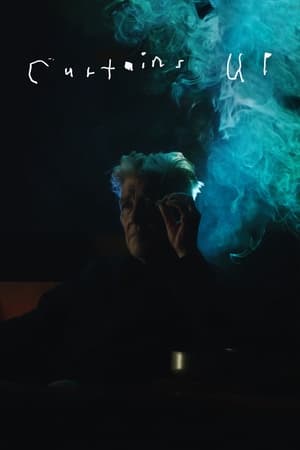


American auteur David Lynch opens up about the magic of the cinema in this new profile from Stella McCartney. Created by Lynch's son Austin Lynch and fine artist Case Simmons, the creative duo behind Los Angles-based studio Tête-à-Tête, their film offers us a rare insight into Lynch behind the lens, teaching us about his theory of film as well as his lifelong pursuit of transcendental meditation.
Four more classic horror films that are entertaining even if occasionally absurd.
A new chapter for the Predator Franchise, Prey(2022), brings an action-packed film of two hunters going against one another to prove their worth in the hunt.
Alongside A Drowning Man, I Signed The Petition, 3 Logical Exits, and A World Not Ours, A Man Returned continues to paint a realistic portrait of the Refugee Crisis that eschews the Western gaze and stereotype. These are real portraits painted by a director with lived experience, cultural connection and an amazing eye for visuals.
With The Father, writer-director Florian Zeller- who wrote and developed the play upon which the film is based- pulls no punches as he confidently makes every effort to put the audience in the mind of someone whose grip on reality has all but vanished. It’s a dazzling testament to Zeller’s abilities as a director as he makes his first transition from stage to film appear as if he’s been working behind a camera his entire career. The dialogue he fashions with co-writer Christopher Hampton, along with the work of production designers Peter Francis and Cathy Featherstone, collectively makes the downward spiral of dementia startlingly tangible, doing so in a way that can be comprehended by everyone except the person it directly affects.
One of the great achievements of this film is its ability to challenge the mind and to force you to try to process information in a different way than you’re used to.
The more biting satire is reserved for those on top of the power structure, such as the police, while those occupying lower levels are given more nuance and likability, even if they operate on the wrong side of the law. This principle gives Deep Cover its heart.