
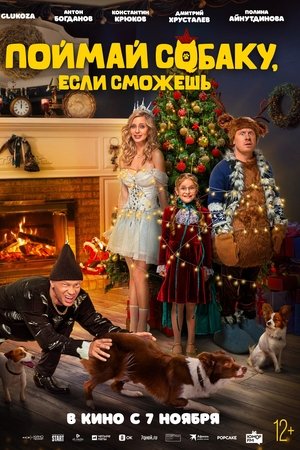
Catch the Dog If You Can
The father of ten-year-old Lusha, the unsuccessful writer Boris Kolechkin, works as a sales consultant for Lyosha's mother Alina. She once preferred him to Sergei Mamontov, on whom the fate of her business now depends. Alina, Lusha and Boris, at the invitation of Amiantov, go to his New Year's carnival. There, a duel begins between the men. The soul helps the father as much as it can. The Kolechkins are unaware that the stolen ring of the ancient Egyptian queen Nefertiti was hidden in the half-eaten hot dogs that the homeless dog Caruso treated their dog Christie to. The kidnappers of the priceless ring arrange a hunt for Christie in the absence of the owners of the Kolechkin house. They are confronted by Caruso, who is in love with Christie, who has been sheltered by his family.

- / 5
PopScore
Representation
Pictures and Videos

Movie Information
The father of ten-year-old Lusha, the unsuccessful writer Boris Kolechkin, works as a sales consultant for Lyosha's mother Alina. She once preferred him to Sergei Mamontov, on whom the fate of her business now depends. Alina, Lusha and Boris, at the invitation of Amiantov, go to his New Year's carnival. There, a duel begins between the men. The soul helps the father as much as it can. The Kolechkins are unaware that the stolen ring of the ancient Egyptian queen Nefertiti was hidden in the half-eaten hot dogs that the homeless dog Caruso treated their dog Christie to. The kidnappers of the priceless ring arrange a hunt for Christie in the absence of the owners of the Kolechkin house. They are confronted by Caruso, who is in love with Christie, who has been sheltered by his family.
Rating:
Genre:Comedy
Written By:
In Theaters:
Box Office:
Runtime:96 minutes
Studio:All Media A Start Company, Smart Film, START Studio







Articles You May Like
Incluvie Film Fest 1st Place Winner: ‘Is He?’ Review
Everyone needs a BFF and a "wing person" like Yumi (Chloris Li). Li brings the "straight person" persona, literally and figuratively balancing James Aaron Oh's perfectly timed comedic delivery as the unlucky-in-love.
Black Swan and its dark feminine energy
Every movement becomes a question of identity. To become who we are meant to be. In order to reach that we often have to shed who we once were, and that shedding can sometimes be so brutal it’s ungraceful.
Jane Austen Wrecked My Life (2025) and Wasted My Time
We, the Jane Austen aficionados, are suckers for everything and anything under the sun that’s remotely related to her and her world. That’s because we are so drawn to her unique style of fiction, romance, and social commentary, we take any allusion to her influence as a hint to what to expect when we start watching a movie or reading a book.
“Workin’ Moms” is a Brilliant Comedy About Juggling Parenting and Professionalism
It’s 5:30am. The baby’s crying, but you need to finish prepping for your big pitch at work that morning. What do you do? You do the near impossible: both. That's what "Workin' Moms" is all about.
'Jack and Diane' Review: Wasted Potential
The plot could’ve really been interesting if the elements of lycanthropy was integrated with perhaps the struggle of identity of being LGBTQ+. It's an experience for so many that as they’re starting to realizing their true selves, they feel like a monster, especially if they come from unsupportive homes or communities. Instead, the horror and transformation elements seem thrown in without contemplation of how this could deepen the narrative.