



The Good Deeds in ‘A Good Person’
‘A Good Person’ makes it clear that forgiveness is hard.
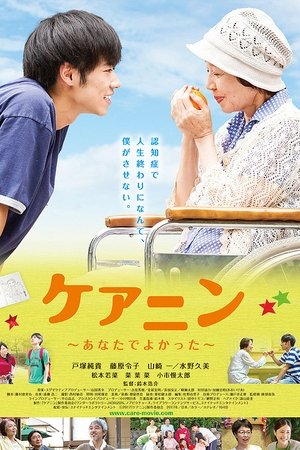


Kei Omori did not have anything he wanted to do with his life. Without any specific reasons, he enrolled in a special nursing school. After his graduation, he begins work at a small-size multi-functional facility as a care worker. He has a hard time communicating with the elderly people with dementia. For the first time, he is placed in charge of 79-year-old Keiko Hoshikawa who has dementia. With the help of the staff and trial-and-error, he develops a relationship with Keiko.
‘A Good Person’ makes it clear that forgiveness is hard.
What are we willing to walk through to see our dreams come to pass? Our minds might be so wholly alive with the passions we carry and the plans we make to see these things become all we wish them to be, yet life doesn’t always want to come alongside. Instead, obstacles arise, both physical and mental, which attempt to dissuade us or even prevent us from moving forward, stalling or stagnating the momentum to achieve what we desire. The age-old question remains….can we overcome? Or will we BE overcome?
The “gay best friend”, an age-old trope, has been done in countless films and television series. Ranging from one-note (Sex and the City's Stanford and Mario) to nuanced (Unbreakable Kimmy Schmidt's Tituss), the gay best friend exists to support and advise the main protagonist, with their conflicts swept to the side.
(Disclaimer: Harmful Language) In celebration of Pride Month, Father's Day, and father figures (and whoever supports you), I revisit Moonlight's brief but spectacular character, Juan. With overarching themes tied to masculinity, I reexamine his intimacy with Little.
The Vietnamese perspective is not only completely ignored in 'The Greatest Beer Run Ever', but it is blatantly whitewashed and disrespected.
The Force Awakens is A New Hope 2.0, in essence. The story structure is virtually unchanged, marking a safe opening to the new trilogy.