
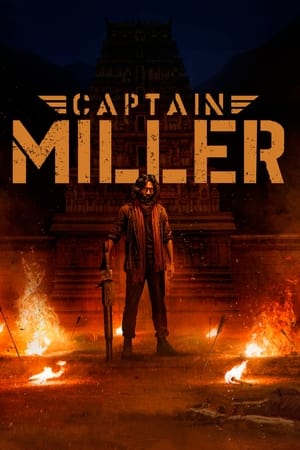
Captain Miller (2024)
In the 1930s, during the British Raj, Analeesan "Eesa", a former soldier of the British Indian Army called Captain Miller, is on a mission to protect the people from the British after witnessing an atrocity.

- / 5
PopScore
Representation
Pictures and Videos

Movie Information
In the 1930s, during the British Raj, Analeesan "Eesa", a former soldier of the British Indian Army called Captain Miller, is on a mission to protect the people from the British after witnessing an atrocity.
Rating:
Genre:Action, War
Written By:Arun Matheswaran
In Theaters:1/11/2024
Box Office:
Runtime:158 minutes
Studio:Sathya Jyothi Films
Cast

Arun Matheswaran
Director

Dhanush
Analeesan "Easa" / Captain Miller

Priyanka Arul Mohan
Velmathi

Nivedhithaa Sathish
Thaenu

Elango Kumaravel
Kannayya

Shiva Rajkumar
Sengolan

Sundeep Kishan
Captain Rafi

Edward Sonnenblick
Andrew Wandy

John Kokken
Prince

Vinoth Kishan
British Soldier

Jayaprakash
Rajathipathi

Aditi Balan
Shakunthala
Articles You May Like
Who Needs 'Independence Day' When You've Got 'Sorry to Bother You'?
Sorry to Bother You ultimately speaks to the unfair advantages that the country’s power structures award to those with the resources to control others, as Lift’s easy access to the media allows his opinion to be the only one that matters in the eyes of the unsuspecting and easily impressed public. Moreover, it reveals the extent to which the American Dream has any true validity. It postulates how the promise of success and fulfillment as promoted by the American Dream more often than not leads to the undoing of the individual. Interestingly, in its revealing of the American Dream as merely a facade, Sorry to Bother You wisely questions whether or not anything can really be done to undo a system that has been accepted and in action for centuries.
5 Great but Rather Unknown Science Fiction and Fantasy Movies Directed by Women, Starring Women
The genres of science fiction and fantasy are not exclusively masculine territory. Over the last few decades, female directors have brought to the screen some of the most visually stunning, intellectually daring, and deeply moving works of speculative fiction. From big Hollywood productions like Wonder Woman and Captain Marvel to independent low-budget films, women filmmakers are making a name for themselves around the world.
'Jurassic World: Dominion' is a Love Letter to the Jurassic Era
The [SPOILER-Free] story of Jurassic World: Dominion is that the humans never learned from their mistakes from the previous films, science is still running amok, and the world is paying the price.
What We Do in the Shadows (of Our Closet Walls)
There’s enough evidence to insinuate that What We Do in the Shadows is intentionally queer-coded.
Redux Redux (2026) and the Violent Nature of Motherhood
A consumed-by-rage woman travels from universe to universe to avenge the death of her daughter by brutally killing her murderer over and over again. And that's all that she does.