
Sick or Evil or Both: “My Friend Dahmer” and the Coverage of White Killers
This HBO mini-series asks why a young white man turned to violence and finds no easy answers. But why do we only ask questions about certain kinds of killers?
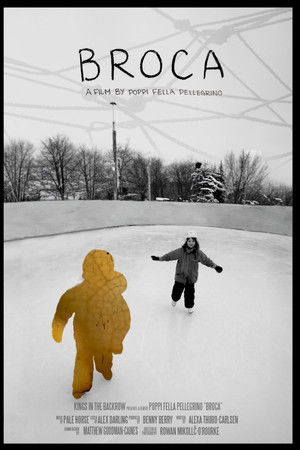


Using poetry, interviews with psychologists and survivors, and corporeal imagery, Broca is an experimental documentary hybrid that explores how the mind-body connection is altered after trauma. The Broca’s Area in the brain is involved primarily in speech production. During a traumatic event or when trying to recall a traumatic event, this area shuts down. This makes it harder for a survivor to talk about what’s happened. Our project is an experimental documentary hybrid that offers a platform for survivors to tell their stories both verbally and non-verbally.
This HBO mini-series asks why a young white man turned to violence and finds no easy answers. But why do we only ask questions about certain kinds of killers?
'Airplane Mode' is a young adult movie that is about a woman who learns to step away from her smartphone, and from social media.
Billy Eichner provides a hearty dose of good old fashioned romance with a lot of laughs
Unlike other documentaries about Princess Diana, Perkins’ film, 'The Princess', is an entire documentary consisting of media coverage and public opinion, rather than a typical series of people interviewed with firsthand experience of the Princess. 'The Princess' beautifully depicts how we perceive Diana as a media figure rather than a real person, specifically creating her persona as a fairytale figure turned saint and icon.
Remember when there was this amazing comedy titled "National Lampoon's Vacation"? To this day, it is a true classic of the genre and certainly put a new spin on precisely what KINDS of insanity could occur when taking the fam on the road. Then, like with so many successful films, there was the sequel (which for me was even MORE of a classic than the original!). However, the third film emerged....and then a fourth. Suddenly, the luster was gone and disappointment set in.
Dead Poets Society relies on patriarchal tropes such as overbearing fathers, contrived brotherhood, and faux-individuality in order to portray its straight white male characters as oppressed.